
Learner-Centered ECOSYSTEM RESEARCH Databook
Explore patterns, practices, and emerging lessons from communities redesigning learning around the needs and experiences of young people.
Introduction
Across communities, education and community leaders are working together in new ways to support young people’s learning across settings. These efforts, often described as learner-centered ecosystems, bring together schools, community-based organizations, businesses, and public agencies, as well as resources, to create more connected, equitable, and responsive systems of learning.
This databook shares early findings on how these ecosystems are developing and operating in practice. It draws on data from Education Reimagined’s first Ecosystem Lab Cohort, a community of practice that brings together leaders working to build and strengthen learner-centered ecosystems in partnership with their local communities.
The Cohort 1 Lab includes 12 sites representing diverse geographies, organizational models, and local contexts. Together, these communities offer insight into how ecosystem-building takes shape across different environments. A full list of participating sites is provided in the Appendix.
Designed primarily for practitioners, this databook highlights patterns that education and community leaders can use to:

Reflect on their own ecosystem-building efforts

Identify areas for growth

Support local ecosystem advancement
It is intended as a practical learning tool to help teams situate their work within broader trends emerging across the Lab community.
While this databook focuses on cohort 1, it is part of an ongoing study. Future databooks will build on this foundation, extending and deepening insights across additional cohorts over time. 1
How to Read This Databook
This databook is organized around a set of core research questions, each one presented as a cohesive, layered narrative. For every question, readers can begin with Key Learnings, which provides a concise answer to the research question; continue to Data & Insight for additional context to help interpret the key learnings and conclude with Deeper Insight, which presents patterns, supporting data, and deeper analysis. This structure keeps each question self-contained while allowing readers to engage at the level of depth that best meets their needs. Key Learnings and Data & Insight sections provide context for the Deeper Insight that follows.
All quotes included in the databook are from Cohort members. Note that some figures may not total 100% or 10 sites because not all sites responded to every survey item.
If you have questions regarding this databook, please email domonique@educationreimagined.org.

Question 1
What are the key components of K–12 learner-centered ecosystems and the function they serve?
Key Learnings
Learner-centered ecosystems are anchored in an intentional shaping of learners’ day-to-day experiences and developmental trajectories through systems designed to support participation and deliberate coordination.
Data & Insight
Building on these key learnings, the data and insight that follow illustrate how these findings take shape in practice—revealing how ecosystem components (e.g., resources, structures, practices, etc.) consistently function across sites to support participation, coordination, and meaningful learner experiences.
The data suggest that ecosystems function as coordinated systems rather than collections of programs, with the sites most commonly reporting the following functions:2

Shaping learner experience and developmental trajectories

Connecting learners to opportunities across settings

Making participation possible

Reducing barriers to access and inclusion

Supporting continuous improvement over time
TABLE 1
Common Functions of Ecosystem Components in Practice
| Common Functions Observed Across Sites | Examples of How This Shows Up in Practice | What This Enables |
|---|---|---|
| Shape learners’ experiences and developmental trajectories | Advisory/navigator roles; competency frameworks; personalized and real-world learning experiences | Personalization; belonging, meaningful learning pathways |
| Connect learners to opportunities | Partner onboarding and communication routines; intermediary roles; co-designed experiences with partners | Access to diverse learning experiences; coordination across organizations |
| Coordinate and align system actors | Cross-sector leadership teams; shared vision-setting; governance and decision-making routines | Alignment, coherence, and shared direction across the ecosystem |
| Make participation possible | Transportation; scheduling, safety protocols, data systems | Learners’ ability to access and move across opportunities |
| Reduce barriers to access and inclusion | Multilingual communication; culturally responsive practices; wraparound supports | Inclusion and expanded participation for underserved learners |
| Support continuous improvement | Data collection routines; reflection cycles; learner portfolios; shared measures | Continuous improvement and visibility into progress |
Across sites, learner-centered ecosystems exhibited a common underlying structure, but not all components played the same role in how ecosystems function. Rather than operating as a flat set of elements, ecosystems are organized around learner-facing experiences, with other components shaping how this work is coordinated and sustained.
At the center are components that directly shape learners’ day-to-day experiences and developmental trajectories, including structures that support personalization, belonging, and real-world relevance. These elements translate the vision of learner-centered education into lived experience.
Partnerships emerge as the primary mechanism through which ecosystems are coordinated. Beyond enabling access to opportunities, they structure how organizations connect, communicate, and align their efforts, acting as the connective tissue that allows ecosystems to function as integrated systems rather than disconnected programs.
Additional components operate at a system level, shaping how ecosystems function over time. These include leadership structures, operational systems, access-oriented practices, and improvement routines that influence whether opportunities can be coordinated, accessed, and sustained.
The distribution of components across sites reinforces this pattern: structures that support coordination and operational feasibility are reported most consistently, while there is greater variation in how sites design and extend learner experiences.
Deeper Insight
Across sites, the functions described in the Data & Insight section are operationalized through a mix of widely shared and more variable components. The most consistently reported elements tend to support coordination and operational feasibility, while there is greater variation in how sites design and extend learner experiences and specialized practices. This pattern indicates that while communities differ in the specific approaches they use, there is a common set of structures used to support how ecosystems function.
TABLE 2
Variation in How Functions Are Operationalized Across Sites
| Common Functions Observed Across Sites | Reported by Nearly All Sites | Reported by Many Sites | Reported by a Few Sites |
|---|---|---|---|
| Shape learners’ experiences and developmental trajectories | Advisory/navigator roles; competency frameworks; learner profiles | Project-based learning; personalized learning plans; real-world pathways | Youth leadership roles; peer mentoring systems |
| Connect learners to opportunities | Partner onboarding routines; communication structures; intermediary roles | Co-designed experiences; internship/ mentorship coordination | Partner quality systems; advisory boards |
| Coordinate and align system actors | Cross-sector leadership teams; shared vision-setting | Decision protocols; governance routines | Community advisory groups; youth co-governance |
| Make participation possible | Transportation; scheduling; data systems; safety protocols | Digital coordination tools; credentialing platforms | Satellite hubs; community-based spaces |
| Reduce barriers to access and inclusion | Multilingual communication; trust-building; culturally responsive practices | Transportation subsidies; wraparound supports | Family liaisons; cultural brokers; restorative practices |
| Support continuous improvement | Data collection routines; reflection cycles | Learner portfolios; shared measures | Pilot evaluations; evidence dashboards |

Question 2
How do the functions vary across socio-cultural and geographic contexts? How do local conditions influence the emergence and sustainability of K–12 learner-centered ecosystems?
Key Learnings
Local conditions shape the development of local ecosystems, including:
- Geography
- Policy environments
- Financial resources
- Community assets (e.g., community-based organizations (CBOs), workforce capacity)
- Economic and demographic characteristics
Data & Insight
Learner-centered ecosystems share a common architecture of functions, but local conditions shape ecosystem growth differently.
We asked the cohort to rate on a scale of 0–2 the influence of local conditions across their ecosystem functions, where 0 = no influence, 1 = moderate influence, and 2 = great influence. The influence ratings show distinct patterns:
Policy environments and financial resources exert the strongest influence on:
- Shaping learners’ day-to-day experiences and developmental trajectories
- Coordinating and aligning system actors
- Making participation possible
- Supporting continuous improvement
Community organizational assets (CBOs, nonprofits) most strongly influence:
- Coordinate and align system actors
- Reducing barriers to access and inclusion
- Supporting continuous improvement
Local economic & demographic characteristics have the highest overall influence rating in the dataset (2.0) and most strongly shape:
- Reducing barriers to access and inclusion
Geographic characteristics most strongly influence:
- Coordinate and align system actors
FIGURE 1
Average Influence of Local Conditions
Across Ecosystem Functions
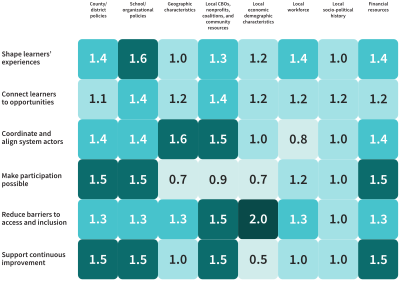
Note. This heatmap displays the average level of influence that different local conditions exert on each ecosystem dimension. The rows represent ecosystem functions and the columns represent local conditions. The color intensity corresponds to the magnitude of influence (i.e., lighter shades = lower influences and darker shades = stronger influence).
Deeper Insight
As demonstrated in Data & Insights, local conditions do not influence all aspects of ecosystems equally; instead, different contextual forces shape distinct dimensions of the work.
TABLE 3
Local Conditions Shaping Ecosystem Functions: Summary of Findings and Illustrative Quotes
| Local Condition | Finding | Quotes |
|---|---|---|
| County/district policies | County and district policies most strongly influenced ecosystem structure by shaping what is permissible around scheduling, staffing, transportation, safety, and credentialing. | “Data sharing policies and agreements with [the] district has [sic] highly informed …the technology infrastructure.” “Board policies drive decisions.” “District partnership through an independent study model provides 50% of funding for the RTS hub.” |
| School/organizational policies | School-level policies shaped day-to-day implementation, determining how advising, instructional time, and learner movement across settings could operate. | “These directly impact how learning journeys are implemented… It takes courage to challenge what has always been done.” “Our internal practices are very flexible and iterative and wholly support our organizational growth.” “School and district policies around tech… may impact student access.” |
| Geographic characteristics | Dispersed communities required mobility and access supports, while concentrated areas required coordination and safety routines. | “Dallas is geographically spread out… infrastructure has to be approached to meet this reality.” “Impacts access to advising spaces and consistent meeting places.” “Location affects physical access to programs, though we mitigate through virtual options and mobile services.” |
| Local CBOs, nonprofits, coalitions, and community resources | The strength and density of local community organizations shaped the availability and diversity of learning experiences. | “Community partners [influence] mentoring, family support services, and enrichment opportunities that complement advisory relationships.” “Partners in the ecosystem have heavily informed the development of… infrastructure, especially technology. Their feedback is critical.” “Fragmented partners create competing priorities and noise.” |
| Local economic & demographic characteristics | Local economic and demographic characteristics drive an emphasis on culturally responsive practices, trust-building, and targeted supports for underserved learners. | “Economic factors affect resource availability and student needs.” “The demographics and socio-economic characteristics of Ojai allow for pocket fees and also support alternative education approaches.” “No two neighborhoods in the city are the same… The demographics of each community informs partnerships.” |
| Local workforce | Workforce availability influenced the breadth and depth of real-world learning opportunities. | “Local workforce helps us know what skills to focus on with students.” “We partner with the local workforce, but to date, their engagement has had no effect on the infrastructure.” “Presence of local tech companies benefits the offering of internships and learning experiences.” “Workforce availability shapes the pathways we can sustain.” |
| Local socio-political history | Historical patterns of inequity, mistrust, or community fragmentation influenced how ecosystems approached relationship-building and participation. | “Long history of racism and segregation [in the larger community].” “Our local community was involved in the transition to learner-centered work… but tensions since then have caused us to go back and rebuild some systems.” “Past educational approaches influence family expectations.” |
| Financial resources | Financial resources shaped capacity by determining staffing, partner coordination roles, transportation, technology systems, and the ability to grow or sustain implementation. | “Minus more direct public funding protocols, it is always a challenge to maintain staffing at appropriate levels.” “We are a public school district so [we] have access to general funds… but this is definitely an area for growth.” |
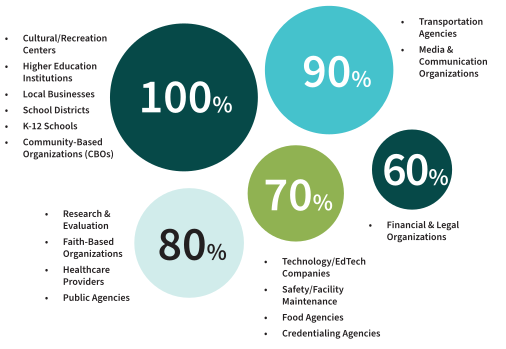
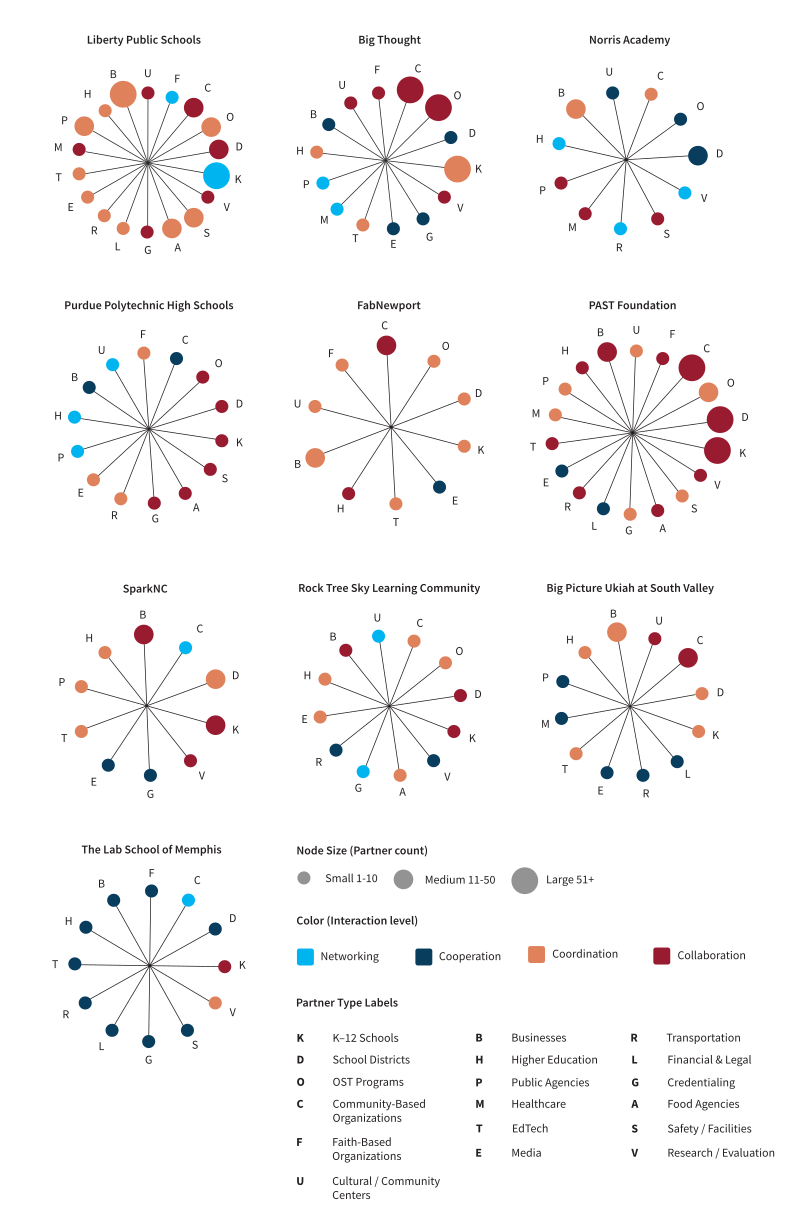
Local conditions shape how communities build and sustain learner-centered ecosystems by determining access to a wide range of partner types. Communities most often engage existing organizations—such as CBOs, K–12 schools, local businesses, school districts, out-of-school programs, higher education institutions, and cultural and recreation centers—and reimagine these relationships in ways that strengthen partnership depth and long-term sustainability.
FIGURE 2
Percentage of Ecosystems Engaging Each Partner Type
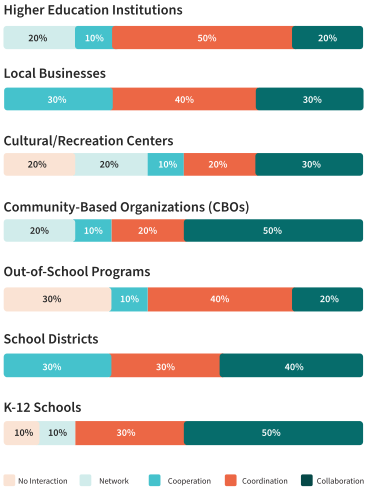
Interaction levels with partners vary widely across communities, from no interaction to deep collaboration. Notably, half of the communities report deep collaboration with CBOs and K–12 schools, while local businesses, out-of-school programs, and higher education institutions are often engaged at a coordination level, reflecting differing degrees of partnership maturity and integration.
FIGURE 3
Percentage of Interaction Levels
for Most Frequent Partner Types

Question 3
How do K–12 learner-centered ecosystems address the diverse needs of learners to ensure equitable access?
Key Learnings
Participating communities currently serve 49,184 learners, and several report they could reach more if infrastructure challenges, including social, physical, and digital barriers, were addressed.
Data & Insight
When surveyed, 60% of the ecosystem cohort identified physical infrastructure as a top priority, while 50% cited social and 50% cited digital infrastructure as top priorities. In terms of impact on capacity, 40% said social infrastructure challenges slightly limit their ability to serve additional learners, 60% said physical infrastructure challenges extremely limit capacity, and 50% said digital infrastructure challenges slightly limit capacity.
Resolving these barriers would most commonly unlock mid-scale growth (101–500 additional learners), especially when digital/technology challenges are addressed (reported by 4 sites), followed by physical (3 sites) and social barriers (2 sites). Only a few sites anticipate small (1–100) gains, and just one site per barrier type projected a very large (10k+) reach.
In terms of who would benefit, the data suggest the strongest lift for BIPOC and lower-SES learners (named by 5 sites under social barriers; 4 sites under physical and digital), with sizable potential for learners with differences (physical = 5 sites, social = 4 sites ). Gains for learners experiencing homelessness and in foster care are solid across social/physical (4 sites each) but somewhat lower for digital (3 sites). Rural communities show the smallest digital upside (1 site), suggesting that physical infrastructure (e.g., transportation, facilities) is the primary lever there (3 sites).
FIGURE 4
Potential Increase in Learners Served by Addressing Infrastructure Barriers, by Barrier Type
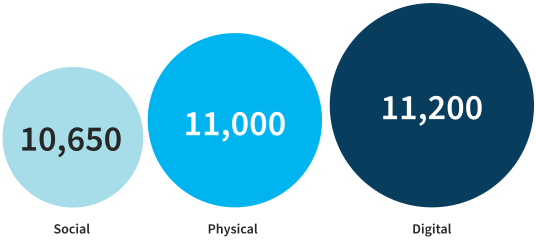
Figure 5
Number of Sites Reporting Potential Increases in Learners Served, by Range
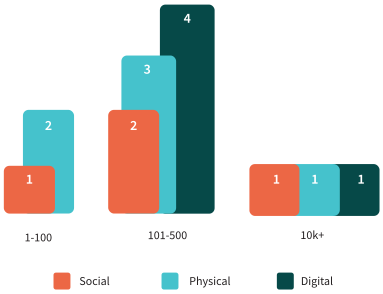
FIGURE 6
Number of Sites Identifying Additional Populations That Could Be Served, by Population Group
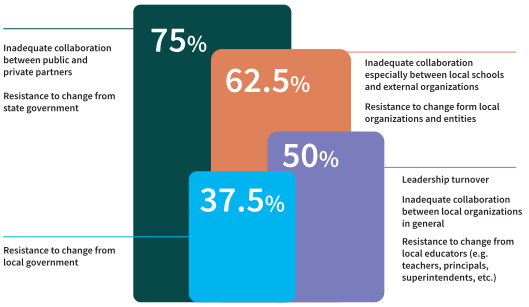
Social infrastructure is defined by the networks, services, and community-based systems that support the well-being, engagement, and learning of students, educators, and families. This may include relationships, support services, partnerships, and mechanisms to foster inclusion. The most commonly reported social infrastructure challenges were inadequate collaboration between public and private partners and resistance to change from state government.
FIGURE 7
Percentage of Social Infrastructure Challenges
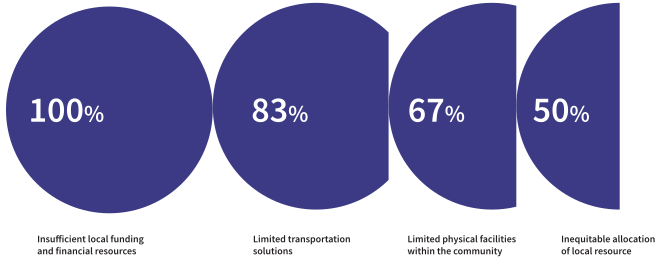
Physical infrastructure challenges are defined by tangible, built environment and facilities that support the delivery of learning (e.g., transportation). The most commonly reported physical infrastructure challenge was insufficient local funding and financial resources.
FIGURE 8
Percentage of Physical Infrastructure Challenges
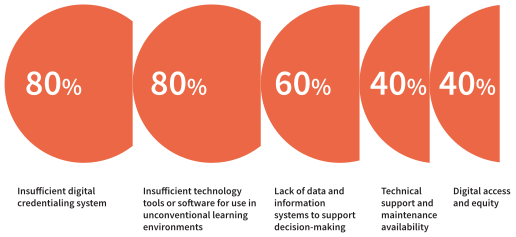
Digital and technical infrastructure challenges are defined by foundational technologies, systems, and services that support the digital operations (e.g., hardware, software, data management systems, cybersecurity, etc.). The most commonly reported digital infrastructure challenges were insufficient digital credentialing systems and insufficient technology tools or software for use in unconventional learning environments.
FIGURE 9
Percentage of Digital Infrastructure Challenges
Across sites, ecosystems are experimenting with a range of infrastructure solutions in response to their local challenges. A clear pattern emerges: some solutions are highly context-specific—shaped by geography, transportation, or facility constraints—while others appear consistently across communities regardless of local conditions. This mix of localized adaptations and broadly applicable strategies reflects the adaptive nature of ecosystem development.
TABLE 4
Infrastructure Solution Types, Example Strategies, and Context-Specificity Insights
| Infrastructure Solution Category | Example Solutions Across Sites | Context-Specific vs. Generalizability Findings |
|---|---|---|
| Social Infrastructure: Human-Capital |
| Relational staffing structures functioned as core system infrastructure in every ecosystem. Variations in intensity and focus reflected socio-political histories, especially in communities working to rebuild trust and belonging among historically marginalized families. |
| Social Infrastructure: Governance & Legal |
| Governance and compliance structures proved essential across all sites. Although specific mechanisms differed by state and district policy environments, every ecosystem required formalized agreements and shared protocols to coordinate cross-sector learning effectively. |
| Physical Infrastructure: Mobility & Access |
| Mobility innovations emerged primarily in communities where transportation barriers significantly limited learner access. Rural dispersion and dense urban transit constraints created conditions in which mobility solutions became essential, while ecosystems with more stable transportation systems reported less demand for these adaptations. |
| Physical Infrastructure: Spatial |
| Spatial innovations most often emerged in communities with limited facility availability, including dense urban areas and geographically dispersed regions. Ecosystems with existing flexible learning spaces showed fewer spatial constraints, making space-related solutions more context-dependent than universal. |
| Digital Infrastructure: Digital & Data |
| Digital coordination tools demonstrated broad relevance across all ecosystems. Differences across communities reflected implementation capacity rather than need, with stronger adoption in ecosystems supported by intermediaries or existing technological infrastructure. |
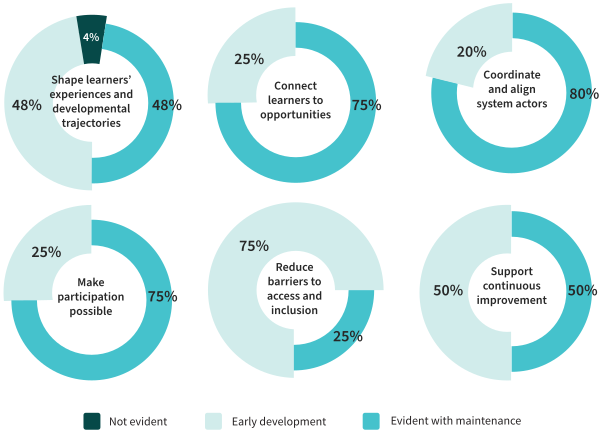
Collectively, local conditions and infrastructure challenges inform the extent to which the identified themes are currently evident across sites. Although several are evident with maintenance, there is notable room for further advancement across a number that are in early development or not evident at all.
FIGURE 10
Distribution of Evident Levels by Functions
Communities are prioritizing equitable access for BIPOC and lower-income learners, but efforts for other underserved groups are still emerging. Seventy percent of participating sites reported that their ecosystems promote access to learner-centered opportunities for BIPOC and lower socioeconomic status learners to a large or moderate extent. In contrast, only 50% reported similar efforts for learners in foster care or experiencing homelessness, suggesting that targeted strategies for these populations are still developing.
Communities described a range of strategies for promoting equitable access to meet diverse learner needs, including flexible scheduling, virtual and mobile program delivery, partnerships with social service and foster care agencies, cost-free credentialing programs, and transportation support.
FIGURE 11
Percentage of Sites Promoting Equitable Access for Each Learner Group

Question 4
How do K–12 learner-centered ecosystems shape learners’ holistic developmental outcomes, including social, emotional, cognitive, and physical development?
Key Learnings
Learner-centered ecosystems are advancing social, emotional, and cognitive growth, while the measurement of physical development is still emerging.
Data & Insight
Most ecosystems are actively supporting and tracking social, emotional, and cognitive development, though physical development remains less consistently addressed or measured. While the majority of sites report tracking social, emotional, and cognitive outcomes to a moderate or large extent, 30% do not track physical outcomes at all, indicating a gap in addressing and evidencing holistic development.
FIGURE 12
Percentage of Sites Tracking Holistic Learner Outcomes
Deeper Insight
Across sites, emotional development, including self-efficacy, resilience in problem-solving, adaptability, and empathy, emerges as the most significantly evident outcome across ecosystems. Eighty percent (80%) of sites report that emotional outcomes are significantly evident, often attributing gains in this area to equity-centered approaches, SEL curricula and training, advisory and mentorship structures, and relationship-rich, asset-based learning environments that reduce competition and intentionally center belonging, confidence, and resilience. Following emotional development, 60% of sites report impact on social development, including relationship skills, community engagement levels, and SEL well-being, often pointing to developmental relationships with peers and adults, advisory and community-based learning structures, restorative and identity-centered practices, and collaborative, asset-based learning environments that build social capital and expand opportunities for connection and belonging. In addition, 40% of sites reported impact on cognitive development, including math, reading, and problem-solving, pointing to access to structured OST learning opportunities, competence-based and pathway-aligned frameworks, and inquiry-driven real-world learning experiences, such as innovation labs, industry-aligned curriculum, and research projects that build technical skills, critical thinking, and analytical capacity. Only 20% of sites reported an impact on physical development, including physical fitness and safety awareness; however, as noted in the previous section, 30% of sites do not track physical outcomes at all, indicating a gap in addressing holistic development.

Question 5
What are the implications of K–12 learner-centered ecosystems on a community’s relationship to its educational system?
Key Learnings
Ecosystems are reshaping community relationships with education by fostering shared responsibility across sectors, aligning learning with local workforce needs, and beginning to elevate youth and community voice in civic life.
Data & Insight
Learner-centered ecosystems are shifting education from a school-centered model to a shared community responsibility, strengthening collaboration across sectors. All participating communities reported that their ecosystems foster communal responsibility for education, with schools, families, businesses, and other local organizations increasingly co-owning the work of supporting learners through joint planning, programming, and engagement.
Ecosystems are beginning to influence local economic development by aligning learning opportunities with workforce needs and expanding access to career pathways. Around half of the communities reported ecosystem-related impact in economic development, pointing to strategies such as industry-recognized credentials, paid internships, and partnerships with local employers to support youth entry into high-demand fields like tech and IT.
Civic engagement is emerging as an area of growth, with some communities elevating youth voice and participation in governance, though efforts remain early-stage for many. About half of the communities are seeing early signs of increased civic engagement, including youth involvement in city planning, student-led service learning, and closer alignment with local government and advocacy groups, though several noted this as a future growth area.
Deeper Insight
Sites with more diverse and deeper levels of interactions with partnerships tend to report stronger community impact, particularly communal shared responsibility. The diversity index (i.e., number of distinctive partner types) shows a stronger relationship than the interaction depth index (i.e., average level of interaction across partner type), suggesting that having a wider range of partner types contributes slightly more to fostering a community culture of shared responsibility. However, the two likely work synergistically: diversity brings more voices to the table and depth ensures those voices are meaningfully engaged.
“Our work around real-world learning has greatly impacted the collaboration with our community.”
“We are just beginning in this area. We have strong relationships with local business leaders and several of them are very excited about developing a formal field site program with Ojai Learning Ecosystem (OLE). The current need is for a dedicated ecosystem coordinator position to be funded in order to allow the meetings and planning needed to develop the agreement and training for these programs.”
“Our learners are beginning to be invited to participate more and more in city youth planning meetings. As RTS / OLE continues to elevate the community-wide awareness of learner-centered ecosystems, young people’s voices are becoming more centered in civic conversation.”
FIGURE 13
Variation in Partnership Network Diversity and Depth
Appendix
A. Study Design
The Ecosystem Lab Cohort 1 study employed an exploratory mixed-methods design that blended systematic and emergent data collection. This approach was well-suited to an early-stage field where key constructs, patterns, and ecosystem functions are still taking shape. Because this was the first cohort in a multi-cohort research effort, the design intentionally cast a wide net to surface the most salient aspects of ecosystem development and identify areas for deeper inquiry in future years.
The study incorporated multiple forms of evidence generation—including structured surveys, qualitative documentation from Lab activities, and emergent insights from the community of practice—to explore ecosystem functions, contextual influences, equity practices, and early indicators of learner and community impact.
The mixed-methods approach enabled triangulation across systematic sources (e.g., survey responses) and emergent sources (e.g., facilitator reflections and cohort member spotlight presentations), allowing the research team to capture both measurable trends and nuanced contextual variation. Quantitative data were used descriptively, while qualitative data provided depth and explanatory insight.
The design reflects the dual goal of producing immediate, actionable insight for participating sites while laying the groundwork for a growing evidence base on learner-centered ecosystems.
B. Ecosystem Lab Cohort 1 Sites
- Liberty Public Schools
- Big Thought
- Norris Academy
- Purdue Polytechnic High Schools
- Fab Newport
- PAST Foundation
- Runway Green*
- Spark NC
- Rock Tree Sky Learning Community
- Big Picture Ukiah at South Valley
- The Lab School of Memphis
- NACA Inspired Schools Network*
* not represented in the survey data
C. Data Sources
- 2024 Ecosystem Lab Survey:
- Ten out of twelve sites (83%) completed an online survey between January and March 2025. The survey included 18 structured and open-ended items addressing ecosystem components, functions, contextual conditions, infrastructure barriers, and early indicators of impact. Respondents were encouraged to collaborate across team members to provide comprehensive, site-level input. The survey could be completed across multiple sessions, and technical assistance and follow-up calls were available as needed.
- Qualitative Documentation
- Qualitative data was gathered through ongoing lab documentation. Lab facilitators recorded notes from their sessions with participating sites, capturing observations, reflections, and emerging themes. This also included an In the Weeds series—spotlight sessions where individual environments shared deeper insights into their local context and work. These sources offered narrative, qualitative perspectives that added depth to the broader inquiry.
D. Analysis Approach
- Quantitative Analysis:
- Quantitative survey data was analyzed in Statistical Package for the Social Sciences (SPSS) to generate descriptive statistics, including counts, frequencies, percentages, and averages, providing a clear picture of trends across the participating communities.
- Qualitative Analysis:
- All qualitative data were analyzed using thematic analysis. The process began with reviewing all site-identified components and functions, along with facilitator documentation and notes from In the Weeds sessions. Open coding was used to identify recurring ideas across sites, and these codes were grouped into broader conceptual clusters, which were compared with facilitator observations to ensure they reflected the lived experiences of participating communities. To understand how local conditions shaped ecosystem development, analysts also reviewed excerpts related to policy, geography, workforce, socio-political history, and resource landscapes. These insights were triangulated with quantitative ratings to build a multi-layered picture of contextual influence.
- An additional layer of qualitative analysis was applied to infrastructure-related data. All excerpts describing infrastructure challenges and local context were extracted and recoded to identify patterns in the components and solutions communities adopted. Through iterative clustering, five categories of infrastructure solutions emerged: mobility and access, digital and data systems, human-capital infrastructure, governance and legal supports, and spatial infrastructure. Each category was then examined across local conditions to determine whether the solutions represented context-specific adaptations or generalizable ecosystem needs.
- A secondary cycle of qualitative coding was applied specifically to infrastructure-related data. All excerpts referencing operational barriers, logistical constraints, or enabling systems were extracted. These included challenges related to transportation, scheduling, staffing, facilities, technology, data-sharing, compliance, and partner coordination. The analyst then inductively coded these excerpts to identify patterns in the solutions communities were developing in response. Each emergent category was then examined across the eight local conditions to determine whether it represented a context-specific adaptation.
- Although coding was conducted by a single analyst, rigor was strengthened through triangulation of survey responses, facilitator documentation, and session notes. Coding refinement occurred over multiple rounds to maintain consistency, and emerging themes were validated in conversation with Lab facilitators to confirm their resonance with practitioner experience. The analysis was conducted from the standpoint of an external researcher supporting an emergent field-building effort. Interpretations reflect a commitment to representing the diversity of ecosystem approaches rather than advancing a single normative model. This analysis does not assess the quality or effectiveness of any ecosystem component or function, nor does it make causal claims about impact. Findings describe patterns across a small cohort of early-stage ecosystems. Variation in how sites interpreted terms such as “dimension,” “component,” and “function” may influence comparability. These boundaries clarify that the analysis is meant to surface shared structures, not prescribe a universal model.
- Collaborative Sense-Making:
- Preliminary findings were shared with Lab facilitators and select community representatives. Their reflections served as a participatory validity check, helping refine interpretations and strengthen the credibility of the final themes.
- This databook is part of a broader study on how learner-centered ecosystems develop, sustain, and create value. The study examines (1) core components and functions of learner-centered ecosystems, (2) how ecosystems emerge and sustain themselves over time, and (3) outcomes for learners and communities. See the Appendix for methods. ↩︎
- While the Ecosystem Readiness Framework outlines a set of domains intended to guide communities toward learner-centered transformation, our analysis takes a different approach. Drawing on survey responses from ecosystem leaders, we conducted an inductive thematic analysis to understand how practitioners currently describe the components and functions of their ecosystems in practice. This analysis was not designed to map the framework onto the data; rather, patterns were derived directly from practitioner responses.
Instead of organizing findings into predefined categories, the analysis revealed a consistent set of functions that components serve across sites. These functions capture how ecosystems shape learner experiences, connect learners to opportunities across organizations, coordinate and align efforts, make participation possible, support access and inclusion, and enable continuous improvement. Together, these findings reflect how communities are actively organizing, coordinating, and sustaining learner-centered work on the ground.
Taken together, this analysis offers a complementary perspective to existing frameworks—highlighting not what ecosystems are intended to include, but how they are currently experienced and operationalized across diverse contexts. While there is some overlap in language, these findings emerged inductively from practitioner data rather than being defined in advance. ↩︎