
Across the country, communities are reimagining public education around a powerful idea: learning should be built around young people and connected to the people, places, opportunities, and needs of their communities.
Today, Education Reimagined announced 11 communities joining the third cohort of its Learner-Centered Ecosystem Lab, bringing the Lab to 33 participating communities over three years.
The growth comes at a moment when families and communities are asking fundamental questions about how education can respond to a rapidly changing world. As communities navigate economic disruption, climate change, social division, AI, and uncertainty about the world young people will inherit, families are also seeking learning experiences that respond more directly to their children’s individual strengths, interests, needs, and aspirations. This moment creates a tremendous opportunity for young people to take a more active role in shaping their personal futures and the world around them.
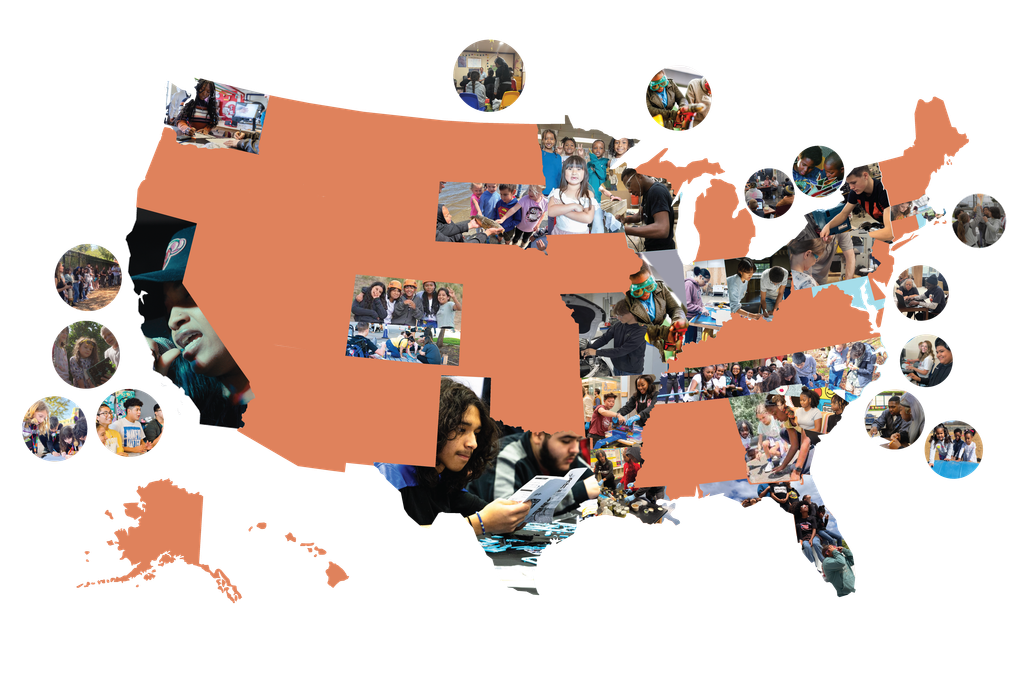
“With the third cohort joining our Ecosystem Lab, Education Reimagined is proud to now support a total of 33 incredible emerging ecosystems where learning happens in community with peers and mentors,” said Demi Edwards, CEO and Co-Founder of Education Reimagined. “By joining this vibrant community of leaders, cohort members will gain inspiration, support from peers and our experienced Education Reimagined team, and resources to help their local ecosystems grow and inspire broader transformation across the country.”
A movement with many starting points
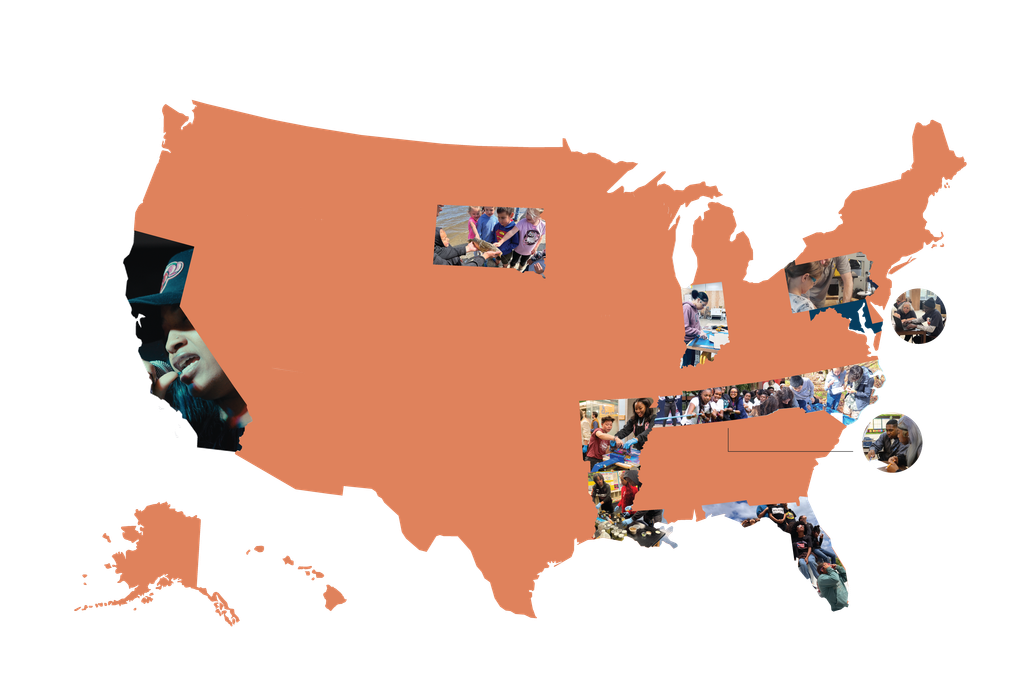
The 11 organizations joining Cohort 3 include public school districts, charter and independent schools, microschools, community-based organizations, and regional networks spanning urban, suburban, rural, and Tribal communities.
Cohort 3 includes: 4Learning / YouthBuild Charter School of California (CA); AMP Lab (IN); B.E. Academy for Girls (TN); Colossal Academy (FL); Ephrata Area School District (PA); EQA Schools (LA); New Village Academy (MD); Onward Learning (SD); Peer Power Foundation (TN); Scott Family Amazeum / Northwest Arkansas Learning Ecosystem (AR); and WNC Resilience Project / Open Way Learning (NC).
While their starting points differ, participants share an ambition to create learning and education systems that are more personalized, flexible, relevant, and connected to the community. Their work also demonstrates that building ecosystems requires more than creating innovative learning experiences; it takes reimagining systems.
Cohort members are tackling practical questions including transportation and access to community-based learning; documenting and credentialing learning across settings; how best to employ AI; strengthening learner voice; coordinating community partnerships; developing sustainable funding and leadership structures; and building evidence of learner outcomes.
Turning innovation into infrastructure
Education Reimagined launched the Learner-Centered Ecosystem Lab to help communities move from individual programs and learning experiences toward the infrastructure and conditions necessary for learner-centered education to thrive across a community.
Rather than prescribing a single model, the Lab brings communities together to learn from one another, use shared frameworks, experience ecosystems firsthand, and develop solutions suited to their local contexts.
During the 2026-27 Lab year, Cohort 3 advances their local ecosystem endeavors, both collectively and individually, with support from each other and Education Reimagined. To inform this work, three immersive convenings will invite them into growing ecosystems on the ground, hosted by past cohort members FabNewport in Newport, Rhode Island; Big Thought in Dallas, Texas; and Liberty Public Schools in Liberty, Missouri. The Lab will culminate with an Ecosystem Summit in May, where participants will share their learning, discoveries, and new questions with broader audiences.
Learning for a growing field
The work is intended to extend beyond the 33 Lab communities. Education Reimagined is documenting insights, challenges, emerging solutions, and implementation lessons from the Lab and sharing them through research, briefs, stories, tools, and events to inspire and inform educators, community leaders, funders, policymakers, researchers, and others, bringing new possibilities for public education to life.
“For decades, Big Thought has connected young people across Dallas and Fort Worth with experiences that help them explore their interests, see themselves as creators, build durable skills, and discover how they can use their talents and contribute meaningfully to their worlds,” said Erin Offord, President and CEO of Big Thought. “The Ecosystem Lab has given us a community of peers to learn with, collaborate with, and navigate the hard work of creating something fundamentally sustainable and different for young people.”
“There is tremendous interest right now in what learning ecosystems could make possible, but we also need to understand what it takes to build them in real communities,” said Lisa Guernsey, a senior director in New America’s Education & Work program, who leads that organization’s National Commission on Learning Ecosystems. “That makes the work happening on the ground incredibly valuable. When communities have opportunities to learn from one another, examine what is working and what is getting in the way, and share those lessons more broadly, it gives researchers, policymakers, and practitioners a much clearer picture of what these approaches need to take root and grow.”
Background on national momentum
The Lab’s growth reflects a broader convergence around community-connected approaches to learning. Remake Learning and Reschool Colorado, amongst others, have spent years building the infrastructure for learning ecosystems. That momentum is increasingly visible across the national field. The Alliance for Youth Thriving now engages more than 40 national partners to advance community-wide learning ecosystems, and the Carnegie Foundation for the Advancement of Teaching is working to move high schools beyond time-based measures of learning. In 2026, New America launched the National Commission on Learning Ecosystems, bringing together more than 20 national leaders and 12 regional ecosystems to study how these approaches can strengthen public education.
Together, these efforts signal growing alignment around a common idea: the future of public education will require stronger connections among schools and the people, places, organizations, and opportunities that surround young people in their communities.