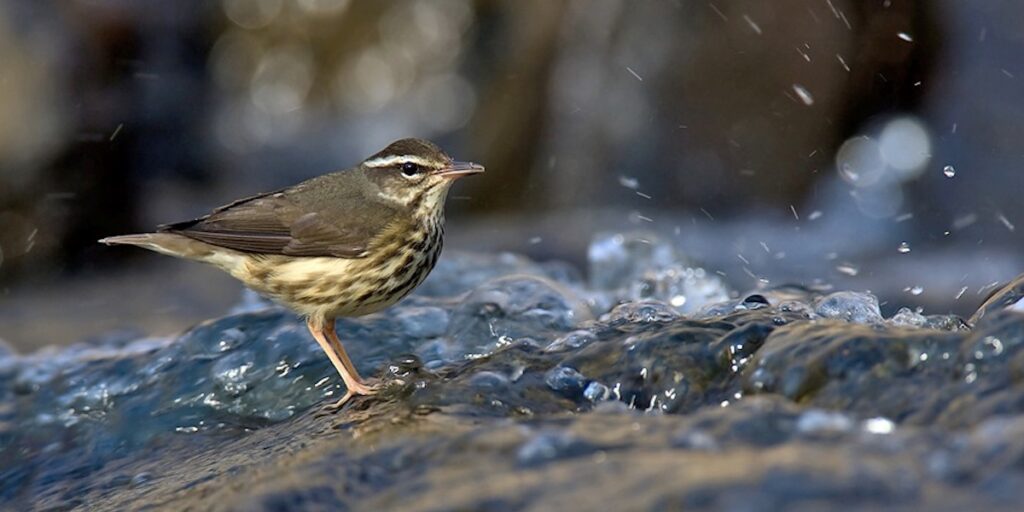
The Louisiana Waterthrush is what scientists call an “indicator species.” It only thrives in ecosystems that are whole, where the water runs clear and life below the surface teems in diverse and delicate balance. When the Waterthrush sings, it signals something essential: this place is alive and well.
I read those words while walking in Bowman’s Hill Wildflower Preserve, part of the Pidcock Creek Watershed in Pennsylvania. I stopped and looked around. The stream beside me ran clear. I could see the rocky bottom, the reflections of trees overhead, and patches of blue sky moving across the surface. Along the banks, moss grew thick. In the shallows, insects skated. Roots reached into the water. Everything felt connected—alive and in balance—the kind of place a Waterthrush would choose to sing.
That notion is at the heart of our work at Education Reimagined, where we are studying and supporting emerging learner-centered ecosystems—places that are transforming learning across communities. And in these ecosystems, we’re learning something powerful: when the conditions are right, young people thrive. Their thriving presence—curious, connected, creative—is the song we’re listening for. Like the Waterthrush, it tells us the ecosystem is alive and well.
To explore this, we launched the Learner-Centered Ecosystem Lab. What began last year with a dozen innovative communities has grown into a network of 22—rural and urban, large and small—each building new ecosystems for learning, grounded in community and shaped by the real lives and interests of learners. These communities aren’t waiting for permission or perfection. They’re designing the infrastructure young people need to access learning that crosses boundaries—of time, place, and institution—and connects meaningfully to their lives. Together, we’re learning what it takes to move from fragmented systems to connected ecosystems—where learning is woven through relationships, and young people, families, and educators shape the path forward.
Across the country, we’re seeing this work take root in new places. In Colorado, community leaders, businesses, educators, and families are coming together to reimagine what learning looks like beyond school walls. In Georgia, young people move through their days following their curiosity, creating meaning, and contributing to their communities. In Massachusetts, school districts are piloting learning in community, where students and families are shaping their own educational journeys, and entire communities are contributing to the development of young people.
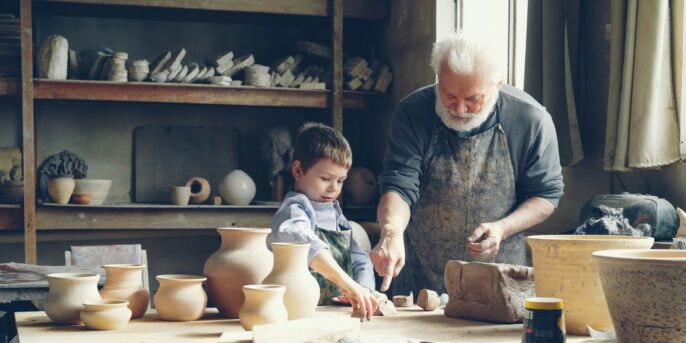
Each of these pilots is unique. The ecosystems aren’t built from a template—they emerge from the strengths, struggles, and spirit of their communities. But there are shared rhythms. Across all the sites, adults are learning to collaborate in new ways, across roles and institutions. Young people are taking on new roles as designers, documenters, and leaders of their own learning. Families, elders, and neighbors are stepping into the ecosystem as contributors, not just spectators.
These sites demonstrate deep connections, shared visions, and a determination to create something new together for all children. These are places where learning feels alive—because it is. Getting to that aliveness takes real work—both structural and relational.
We’ve seen that thriving ecosystems don’t just rely on goodwill—they grow from specific, intentional conditions. They begin with a clear, shared purpose for learning that centers the growth and dignity of every child.
Bobbi Macdonald
But just like the clear-running streams the Waterthrush depends on, these learning ecosystems require intentional care. They don’t grow in conditions clouded by rigid compliance, fragmented efforts, or isolation. They need trust. They need time. And they need people willing to listen deeply to young people, to families, to one another, and to the land they’re rooted in.
We’re learning that ecosystem-building involves both technical and adaptive work—a distinction first named by leadership scholar Ronald Heifetz. Technical challenges may call for new tools, structures, or systems. But the deeper shifts are adaptive: they ask us to rethink roles, relationships, and ways of working. This kind of transformation is deeply relational. It grows at the speed of trust—and through shared stories, shared work, and a shared commitment to place. It requires disrupting habits of control and competition, and instead investing in networks of collaboration, reciprocity, and belonging. When those conditions are present, something extraordinary becomes possible. Learning flows. People connect. And new patterns of care, creativity, and contribution begin to emerge.
We’re still early in this work, but already, the ecosystems are teaching us. We’re learning that shifting from school-centered to learner-centered isn’t about replacing one system with another; it’s about reorienting around purpose, relationship, and the lived experiences of young people. It means asking different questions. Not “How do we improve schools?” but “What does this community need to thrive?” “How do we make sure every learner is known and supported?”
We’ve seen that thriving ecosystems don’t just rely on goodwill—they grow from specific, intentional conditions. They begin with a clear, shared purpose for learning that centers the growth and dignity of every child. They invest in building a shared vision of the ecosystem and community. They organize people, places, and resources into a network of support, rather than leaving learners to navigate disconnected systems. They expand who counts as an educator, elevating families, mentors, and community members as co-creators. They honor place, weaving in local culture, history, and assets. And they create structures that allow for ongoing learning—flexible, adaptive, and rooted in feedback from learners and families. These conditions aren’t theoretical. They are being practiced now, and they are what make the work real, durable, and alive.
This isn’t a quick fix. And it isn’t a single story. Learner-centered ecosystems are growing because they make sense. They feel right. They reflect the world young people deserve and the future we want to shape together. To sustain this work, we’ll need many ways of making it visible—stories, images, data, and moments. We’ll need to listen closely to name what’s changing and to uplift what’s growing. We see career pathways and social networks forming. We see stories woven into a shared fabric of new voices, new ideas, new relationships braided into the whole.
The future is not just arriving—it’s being made, right here.
So we listen. For the signs that something new is taking root. For the song of the Waterthrush and those early indicators that tell us we are on the right path. And we respond by clearing space for what wants to grow.
Imagine our country full of these ecosystems, each one shaped by its people and place—where learning is visible, joyful, and real. Communities connected and business and civic structures all infused with young learners’ ideas and creativity, not as an exception, but as a way of being.
So let me ask: What are the signs of thriving in your community that lead to the song of the Waterthrush? If learning were truly thriving where you live and if every child were known, supported, and invited to lead, what would you see? What would you hear? What would it feel like to walk through that place? What would be around you? Who would be part of it? What questions would you need to answer to get there?
These are not abstract questions. They are design questions. They are questions communities are asking right now. When we ask these questions seriously and listen closely to each other, we don’t just hear the song; we become part of it.