“What happens when an entire community begins to see itself as responsible for the education of young people? What happens when local businesses, nonprofits, artists, scientists, leaders, neighbors aren’t just occasional visitors and trip hosts, but they really become coeducators? The future of education is not about making schools better. It’s about inviting the village back in.” — Kyle Gamba, La Luz Education
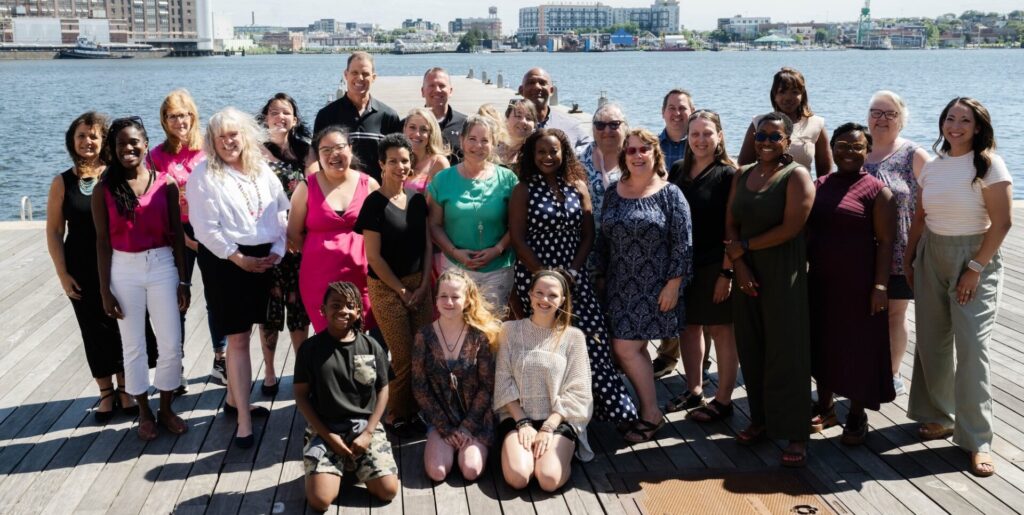
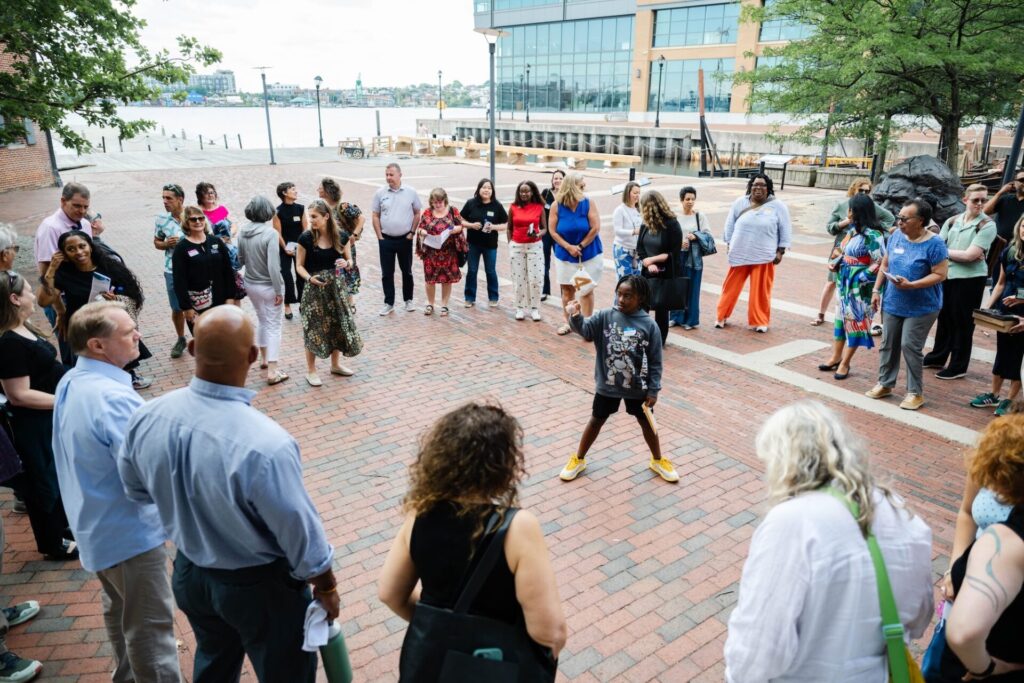
Those words from Kyle Gamba of La Luz Education opened the Learner-Centered Ecosystem Summit in Baltimore last month. They also captured the central question explored by leaders from 23 communities participating in Education Reimagined’s Learner-Centered Ecosystem Lab.
At its heart is a simple but ambitious idea: The future of public education depends on more than improving individual schools. It requires reimagining the system itself. A system where every young person is on a unique learning journey, guided by people who know them well through a connected network of schools, families, community organizations, employers, higher education, libraries, museums, neighbors, and countless others working together to support young people.
Over the past two years, 23 communities from across the country have participated in the Learner-Centered Ecosystem Lab as they designed, tested, and expanded learner-centered ecosystems in their own places.
At the Summit, Education Reimagined’s Coi Marie Morefield led a storytelling session, Under the Banyan, helping us consider Banyan trees and how they don’t grow from one root, but send new roots down from their branches wherever the wind tests them hardest, until one tree becomes a grove. After each story, the room repeated back, like a refrain, “The harder the wind blows, the deeper the roots grow.”
That’s not just a metaphor. The communities in this Lab are doing this work in a moment rife with challenging political, economic, and social pressures. And still, the roots are dropping.
Here are three insights emerging across those communities about how learner-centered ecosystems are growing and what they need to thrive.
Community partnerships are the infrastructure of learning ecosystems
Learner-centered ecosystems are designed to follow the unique needs and aspirations of every learner. That changes everything: How we spend our time, where the learning takes place, how we organize ourselves, and who holds responsibility for helping young people learn and thrive.
The sites in the ecosystem lab are weaving new kinds of learning opportunities directly into young people’s lives. In some places, employers help design career pathways, internships, apprenticeships, and real-world learning experiences. Libraries, museums, and community organizations become places where young people pursue their interests and build new skills. Civic leaders, scientists, and artists partner with educators to engage learners in projects that address local challenges. These experiences help young people discover who they are, what they care about, and how they can contribute.
These partnerships do more than expand opportunities. They become the infrastructure that allows communities to coordinate around young people. Like a healthy ecosystem, every partner plays a different role, but all contribute toward a shared vision for learner-centered education.
Emerging research from the Learner-Centered Ecosystem Lab reflects this shift. Every community in the Lab reported the same shift: Schools, families, and local organizations are no longer just supporting the work. They’re co-owning it. Creating it together.
Over time, these partnerships become the infrastructure of the ecosystem. As Education Reimagined’s CEO Demi Edwards reflected during the Summit, “We collectively discovered what it means to have shared responsibility for the growth and thriving of our children.”
Belonging is one of the clearest signs a learner-centered ecosystem is actually working
Learner-centered ecosystems pay close attention to whether young people feel known, experience meaningful relationships, discover purpose, and see pathways toward a hopeful future. That’s centering a deep respect for who a learner already is, and who they are becoming. That requires relationships and structures that are aimed toward deeper learning. And it shows up in real ways. Parents told us their children gained more clarity about the future, a stronger sense of ownership over their learning, and motivation that hadn’t been there before.
Shawn Hoffman-Bram knows that shift firsthand both as a district leader and as a parent. Director of Community Education for Eden Prairie Public School District in Minnesota, she reflected on how visiting learner-centered communities across the country changed the way she saw the work:
“In the past, we built systems that celebrated one kind of learner, one kind of success, and one runway. And for those who didn’t fit, we offered sympathy, but not solutions. We traveled all around the United States to innovation centers, to learning labs, and what I found stopped me every single time. I found young people who were quietly written off, but standing in an innovation lab with a posture of dignity. Like they had finally been handed something that fit, and the energy in those rooms was like nothing that I had experienced in a traditional classroom. It was the energy of people discovering, maybe for the first time, that they are capable, that they do matter.”
Stories make systems change visible, actionable, and scalable
Building something new inside a system that was built for something else is slow, constrained work. Ecosystems that are deeply rooted emerge over time.
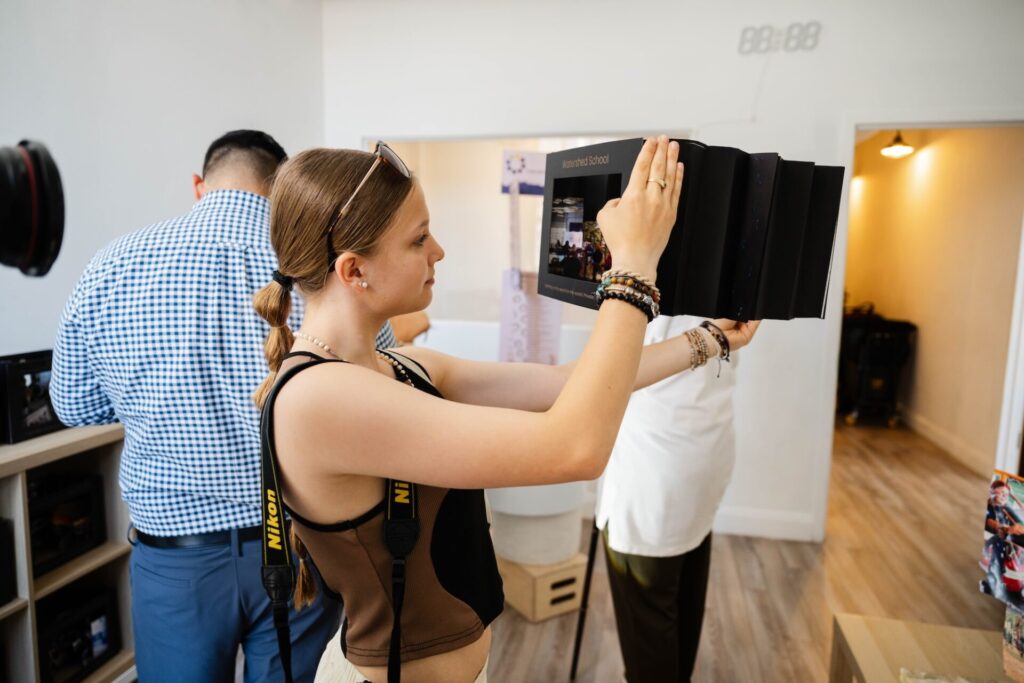
Every site in the Lab works to make their ecosystem visible. That work isn’t separate from building the ecosystem. It’s how the ecosystem gets built.
Telling the story of an ecosystem is an invitation. It asks a family to look closely and see what their child is actually learning. It asks a mentor or an employer to keep showing up, year after year. It asks a community to trust that the work is real enough to be part of. None of that happens once. It has to be the ongoing work of the community through a shared vision. That ongoing exchange, telling, listening, and showing up again, is one of the defining characteristics of learner-centered ecosystems. It is what turns a collection of organizations and programs into an ecosystem that is alive: aimed at thriving, held by many, and growing over time.
Susan Hart understands that better than most. For years, at Lafayette Big Picture School, she kept the story close and protected it. Susan reflected:
“Telling our story is about honoring the learners, the families, the educators, the mentors, the employers, the community members who help build something extraordinary together. It’s about making visible the ecosystem that quietly emerged around our young people. For years, our focus was survival. Today, our responsibility is contribution.”
Looking Ahead
The conditions have changed.
For years, this work happened quietly, in communities that had to prove themselves before anyone would believe them. Today, those communities are finding each other. Leaders are seeking out the places already doing this well. And the country is beginning to acknowledge what these communities have known all along: The challenges facing young people were never going to be solved by schools alone. Partners across many sites say that it’s not that we have to invent a bunch of new things. Most communities have what they need. It’s a new way of thinking about it, connecting communities, and it resonates with a very old way of creating a village.
That’s the thread running through everything you’ve just read. Partnerships that function as infrastructure. Belonging becomes a measure of success. Making ecosystems visible through stories that generate action and impact. None of it is new. All of it is possible, because communities decided to build it together.
This year, Education Reimagined is publishing our first databook, drawn from findings of our first Lab cohort, along with a companion research brief. This work is done in good company. Organizations like Remake Learning, PlayLab, Alliance for Youth Thriving, the National Equity Project, and New America’s National Commission on Learning Ecosystems are asking many of these same questions, in practice, in policy, and in research, and we are grateful to be learning alongside them. No single organization is going to build what young people deserve. It will take all of us, together. And at the heart of this work is seeing each learner as unique, with gifts to share.
Schuyler Bice, a learner at the Summit, put it even plainer:
“I didn’t realize at first the importance of us being here. But hearing what everyone had to say, it made me realize, hey, maybe we are the future. And I thought that was really cool.”