Safety First!
Before anything else, the first lesson I learned as a school principal in Baltimore City was safety first. From there, all else followed. And by safety, I mean getting students into school, ensuring they are not harmed throughout the school day, and making sure they get home safely to the best of my team’s ability. When everyone makes it through the day without incident, I ride home playing Ice Cube, saying, “Today was a good day.”
Safety Has a Last Name
In schools, safety is the first thing we learn to prioritize because without it, not much else will work. A child who isn’t safe cannot learn. A school that isn’t safe will not live up to its potential. This is where culture usually eats strategy for breakfast, as many say. So we create rules, protocols, schedules, and security plans—structures meant to protect bodies and maintain order. Safety becomes the baseline condition that makes everything else possible.
But safety has a last name, and that last name is health.
Safety is not separate from health; it is one member of a larger family within the health domains. Safety is an outgoing, attention-grabbing member. The one we check on constantly. The one with safety drills, walkthroughs, lockdowns, compliance checks, and daily reminders. Meanwhile, other relatives under the same umbrella—mental health, emotional well-being, physical health, social connection—often sit quietly in the background, assumed to be fine…until they are not.
Safety is public. Health is personal; private even. And yet, what is private eventually becomes visible. In our bodies, in our behaviors, in our schools and classrooms, in our communities, and in our lives.
What Learner-Centered Ecosystems Taught Us
Education Reimagined asks us to look beyond classrooms and school buildings and toward learner-centered ecosystems—the people, environments, relationships, routines, and resources that shape learning over time. What makes this framing powerful is not simply that it centers the learner, but that it centers conditions. It asks a deceptively simple question: What conditions allow a young person to thrive?
That question does not belong to education alone. It belongs—perhaps even more urgently—to health and well-being.
Health, like learning, does not happen in isolation. Ecosystems grow and prosper depending on their living conditions. Ecosystems are fractal by nature: the same organizing principles—interdependence, balance, strain, and adaptation—repeat across scales. The human body, a family, a school, and our very own neighborhoods are all ecosystems. These systems are interconnected, and the health of one influences the others.
When we adjust the aperture and look at schools through a wider lens, we stop seeing them as neutral learning environments and start recognizing them as health-shaping environments. Education Reimagined helps us see how ecosystems shape learning. The invitation here is to apply this frame of thought to health and to ask what it would mean to design environments that support not only academic success but also long-term vitality.
Why Health, Why Now
For every 100 adults living in the United States, about 50 live with high blood pressure. For every 100 deaths in this country, more than 25 are caused by cardiovascular disease. By 2050, roughly one in four adults is projected to be living with diabetes. Overall, in the US, six out of 10 adults have at least one chronic disease, while four out of 10 have at least two.
These numbers are not just ringing the alarm in the United States. Across the globe, preventable chronic disease is on the rise, life expectancy is flattening or declining, and the gap between lifespan and healthspan continues to spread. This is not merely a medical crisis. It is an everyday-life crisis.
And our children are not exempt.
For every 100 high school students in the United States, nearly 40 report persistent feelings of sadness or hopelessness. Anxiety, depression, sleep disruption, disconnection, loneliness, and chronic stress have now touched more adolescents to the point where what once felt exceptional now feels routine.
It’s worth noting that students spend approximately 15,000 total hours inside educational institutions between kindergarten and high school graduation. Fifteen thousand hours of more than just learning six subjects. They are also sitting, moving, eating, waiting, rushing, worrying, socializing, competing, complying, scrolling, absorbing, and navigating everyday life. Those hours do not simply shape academic outcomes; they shape minds, identity, and a sense of self. They shape habits. They shape how young people come to understand their bodies, their self-worth, their abilities, and their limits.
According to major public health authorities, education is recognized as a core social determinant of health. But we often interpret that in terms of future outcomes—income, employment, access to opportunities. We talk far less about what happens during those 15,000 hours—the lived experience of schooling itself. Schools are not neutral in a child’s health journey.
Why This Is Personal
The final week of June 2024 marked both my last week at work and the last days of my mother’s life. Years of chronic illness gave way to a hemorrhagic stroke, and what had unfolded slowly ended with the suddenness of a lightning strike. Before the stroke that ended her life, my mother lived for years with diabetes and high blood pressure. These conditions did not arrive suddenly. They accumulated over time. My mom raised my brothers and me in the Bronx, NY, from the 1970s until the 1990s. Her life was not the easiest; yet, no matter what, she hustled hard for her three sons. Her expectations were high, and she is the reason I went from Moore Houses to Morehouse College, from the Bronx to Brown University, and from East Harlem to Harvard. She helped shape me while she was being shaped by stress, environment, access (or lack thereof), poverty, and what had been normalized as everyday life.
My father’s story had a similar arc but with a twist. He never looked sick, so I always thought he’d be fine and live until at least his 80s. But like a cunning constrictor, prostate cancer, strokes, and dementia attached to him and did not let go—for years. Neither of my parents died from a single event. They were worn down by ecosystems that failed them long before survival was all that remained.
They are not anomalies.
In the United States, Black Americans face significantly higher rates of hypertension, stroke, cardiovascular disease, and early mortality. These disparities are patterned, persistent, and place-based—concentrated in regions like the Stroke Belt in the Southeast, where stroke incidence and mortality have been consistently higher than the national average for decades. Such regions are ecosystems shaped by discrimination and structural oppression—not by accident, but by design. This trickles down to the food we eat, the jobs we do and don’t get, the places we are offered to live, constant pressure and stress, and policies that keep things entrenched this way.
A Different Childhood, A Different Ecosystem
The ecosystems shaping childhood today are fundamentally different from those that shaped previous generations. Ultra-processed foods dominate diets. Screen-based technologies hypnotize attention. Sleep is disrupted. Movement is constrained. Stress feels nonstop. Childhood has become more sedentary, intentionally stimulated, and increasingly fragmented.
All of this exists within a robust consumer ecosystem—one designed to capture attention, engineer desire, and normalize dependency. Children are not simply making individual choices; they are growing up inside systems carefully designed to influence how they cope, consume, and self-regulate.
And yet, schools—by and large—have not changed.
Youth ecosystems have transformed. School ecosystems essentially have not. It’s an unsustainable mismatch.
Learner-centered ecosystems work because they align conditions—vision, relationships, daily experience, infrastructure, and policy—around the learner’s needs. That same logic applies to health.
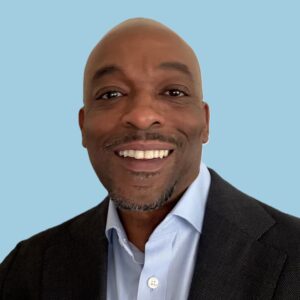
Dr. Danique Dolly
Health Reimagined: Embedded, Not Added
When we view health and well-being as ecosystems, they cannot be relegated to the margins of school life. As with learner-centered ecosystems, it cannot fully prosper if it belongs to a single class, initiative, or staff member.
Reimagining health in schools means shifting from “What program should we add?” to “How is health embedded into the way this place functions every day?”
A thriving health ecosystem requires a partnership between community stakeholders and families. It takes educators, medical professionals, businesses, public health experts, wellness practitioners, and community organizations to inform one another’s practice and contribute to pro-health solutions. It means considering health in our decisions and designs on schedules, expectations, food and snacks, movement, stress management, digital presence, and relationships.
Approaches like the six pillars of lifestyle medicine—nutrition, movement, sleep, stress management, avoidance of risky substances, and positive relationships—offer practical guidance, not as a checklist, but as infrastructure. Research shows these pillars help prevent chronic disease by integrating healthy living into daily life.
There are different approaches for those working on health and well-being solutions. Harlem Children’s Zone’s Healthy Harlem, the Alliance for a Healthier Generation’s work on healthy communities, and emerging efforts within learner-centered spaces like Big Picture Learning’s BP Living are signals that the field is beginning to wrestle with a larger truth: learning ecosystems cannot thrive independently of health ecosystems.
If learner-centered ecosystems flourish when vision, relationships, daily experience, infrastructure, and policy are aligned, then the same must be true for health. A health ecosystem is broader and deeper than a service or a class—it is the set of conditions that shape how bodies move, rest, eat, cope, connect, and recover over time. When those conditions align, health stabilizes. When they don’t, strain accumulates. Similarly, this is as true for a nervous system as it is for a school or a neighborhood.
Health Is a Condition, Not a Program
What Education Reimagined offers is a way of seeing how human systems prosper. Learner-centered ecosystems work because they align conditions—vision, relationships, daily experience, infrastructure, and policy—around the learner’s needs. That same logic applies to health. If we take seriously that habits in one’s environment shape health over time, then it follows that health, too, must be understood as an ecosystem. Not owned by any single institution, but embedded across the places young people live, learn, and grow—where daily conditions either support well-being or quietly erode it.
A Healthier Way Forward
If we do not intentionally design a health and well-being ecosystem for young people, one will shape them anyway. Consumer markets, engineered digital environments, and the science of attention already do this work, often with remarkable precision.
A healthier way forward does not ask any single institution to do everything; it asks educators, clinicians, policymakers, and families to work interdependently, sharing responsibility for the conditions we shape and the environments we normalize. Schools remain one of the few places where daily conditions can still be shaped at scale. But only if health is embedded structurally, not layered on as an optional extra, but as part of how time gets organized, how relationships form, and how daily life is lived.
We see this clearly in how humans learn language. Fluency does not come from isolated drills or limited exposure. It develops when a person immerses themselves in the culture of the environment where language becomes alive with real relevance. The conditions do the teaching. Health works the same way.
When ecosystems are healthy—when stress is not constant, nourishment is real, rest is possible, and relationships stabilize rather than drain—bodies respond. Minds respond. Learning deepens. Performance follows because the environment promotes it.
We often speak about preparing young people for the future as if we could guarantee that future for them. We teach, now, assuming students will continue on the pathway we helped them get on. But if we are serious about them getting to that imaginary point of success, we must be equally serious about giving them a chance to live long enough to get there.