How Pleasant View and ArcMosaico Are Redesigning Human-Centered Learning
Arriving at Pleasant View Elementary School District in Poplar, California, in 1998 as a fourth-grade teacher, few would have predicted that the district would one day emerge as a leading model for competency-based, student-driven learning.
Pleasant View is a small rural district in California’s Central Valley, serving a community with high poverty rates: 90% of students receive free or reduced lunch, 55% are English language learners, and other opportunities are often limited. Yet over the past decade, the district has quietly built one of the most innovative public education systems in the country, not through isolated programs or top-down mandates, but through a complete redesign of how learning works.
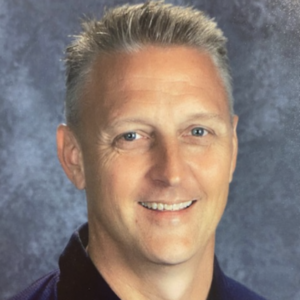
I have served as Superintendent of Pleasant View since 2010. But my leadership story begins much earlier, and much farther away. Growing up in Medina, Washington, one of the nation’s wealthiest communities, I witnessed firsthand how success was often shaped less by schools and more by access, networks, and social capital. I recognized that many of the skills and opportunities that contributed to my friends’ and my success came from experiences outside the school system, and I was determined that my students at Pleasant View would be given the same opportunities, regardless of the zip code they were born in.
The district chose to rethink the system itself, shifting away from compliance-based models rooted in authority, isolation, and standardization and toward a culture centered on agency, relationships, collaboration, and real-world learning.
Mark odsather
Pleasant View’s transformation is rooted in a redesign of what learning looks like and how teachers and students experience school. Rather than improving around the edges of conventional education, the district chose to rethink the system itself, shifting away from compliance-based models rooted in authority, isolation, and standardization and toward a culture centered on agency, relationships, collaboration, and real-world learning. Collaboration in particular has become the foundation of that shift, showing up in how the school day is structured and in how educators work with one another.
That shift starts with the physical redesign of the school day. Traditional classroom walls have been removed and replaced with shared learning spaces where approximately 50 to 60 students learn alongside multiple educators throughout the day. This model creates a culture of continuous feedback, coherence, and lateral accountability among staff. At any given time, students may be working in a small guided group, collaborating on a project, receiving individualized instruction, or working independently based on their needs and interests.
The model also fundamentally changes the role of educators. Rather than working alone behind closed doors, teachers engage in ongoing cycles of co-planning, co-teaching, Instructional Rounds, and shared reflection, constantly analyzing student learning and learning from one another in real time. At Pleasant View, collaboration is how the system functions, constantly changing and taking shape alongside the students themselves.
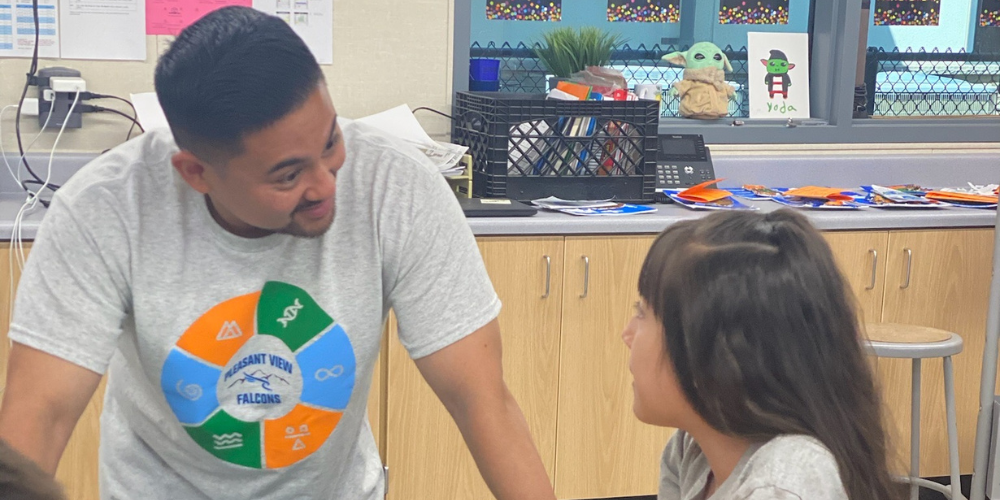
Our learning systems should adapt to students, not force students to adapt to static systems. If visiting our school today, what you see will not look the same three months from now, and that’s intentional. Agency and relationships are at the center of this work: the redesign is not built around programs or technology tools alone, but around creating learning environments where students and educators are active participants, and where deeper learning stems from strong relationships, shared ownership, collaboration, and authentic engagement.
“Co-teaching isn’t just sharing a classroom; it’s multiplying perspectives, insight, and the heart we bring to every student’s growth. When teachers grow together, students gain more than navigation of curricula and lessons; they gain confidence, autonomy, and a belief in their own voice.” –Tashima Irving, 3rd Grade Teacher
Students feel that shift too, especially in the projects it makes possible. One student explained it simply: “I enjoy the projects; we are solving real-world problems.”
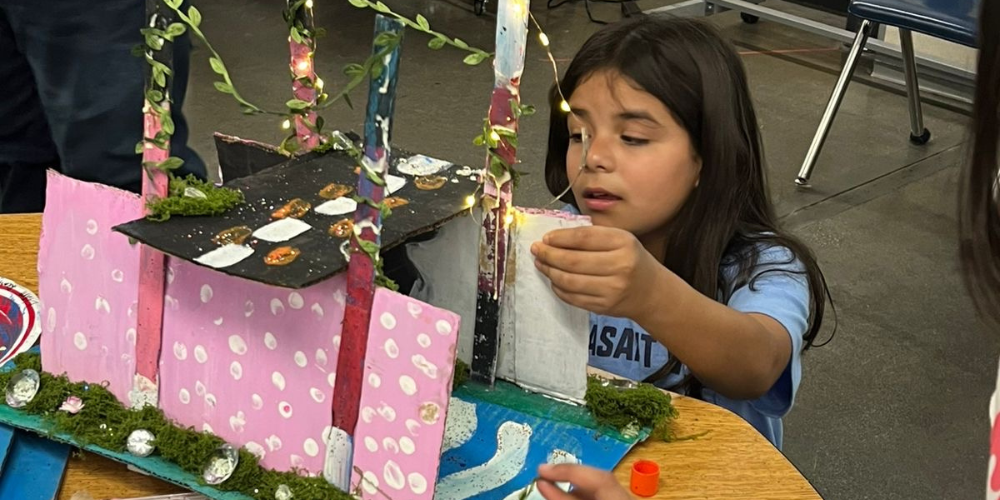
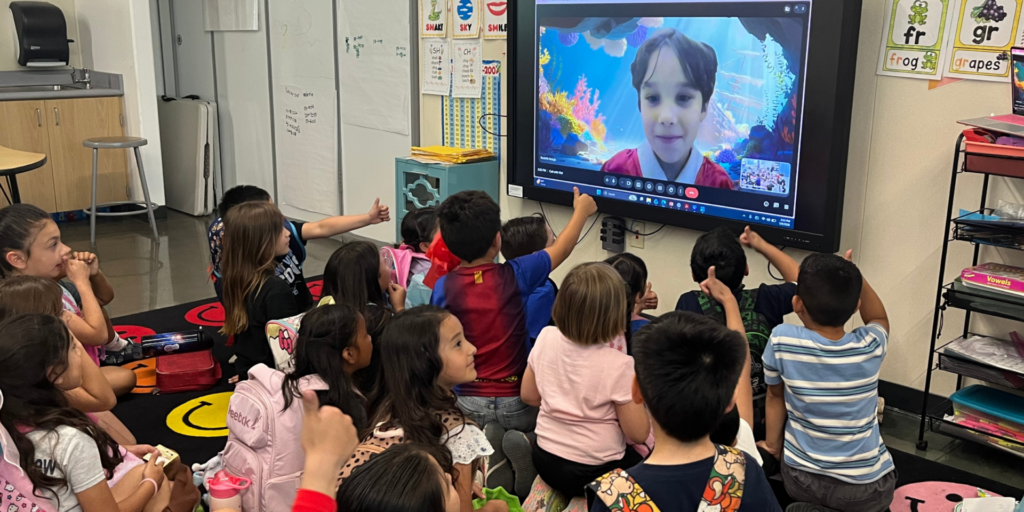
Those projects often connect students to complex global issues in deeply authentic ways. During a Financial Literacy Project tied to the United Nations’ Sustainable Development Goal “Life Below Water,” a kindergarten student explained the plight of the endangered Vaquita porpoise to a visiting Fresno State faculty member, describing how the porpoises live in the Gulf of California and get trapped in fishing nets. Then, confidently pointing at the visitor, she added:
“Interesting fact—when they sleep, half of their brain is asleep and half of their brain is awake, and they are known as the panda of the sea because they have dark circles around their eyes.”
Older students apply these concepts in more complex ways. One eighth-grade student connected financial literacy concepts to the story of Anne Frank, analyzing how scarcity and the allocation of resources shaped daily decisions and survival for families hiding during World War II, demonstrating how economic thinking can be applied far beyond traditional math lessons.
The challenge then became how to capture all that students are learning. For decades, schools have talked about developing skills like collaboration, empathy, adaptability, and leadership, yet traditional grading systems were never designed to meaningfully capture them. Pleasant View is working to change that.
At the heart of this redesign is the ARC Framework, a competency-based learning framework originally developed at Lumiar Schools in Brazil and adapted within Pleasant View’s broader redesign efforts. It’s grounded in a shift from traditional, content-centered schooling toward competency-based and developmentally informed models of education.
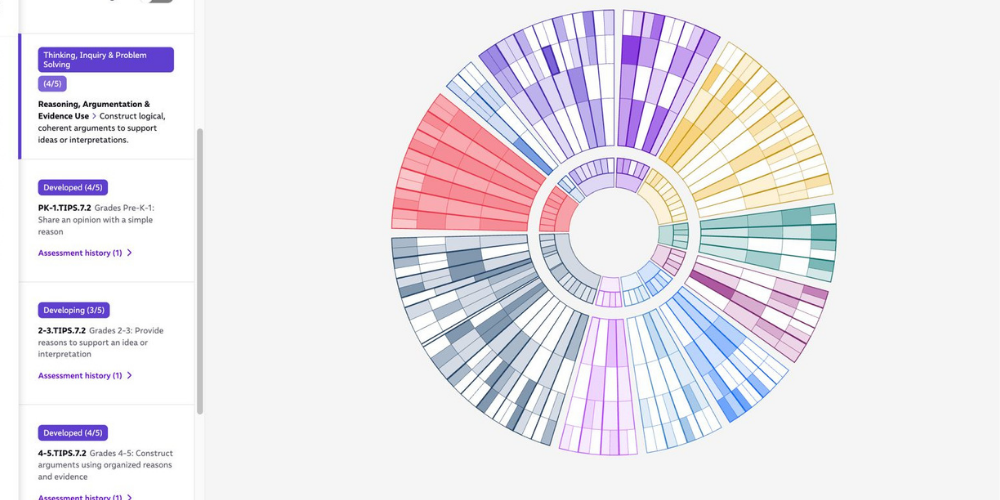
We talk a lot about skills like collaboration, communication, creativity, and leadership, but we have very few ways to show how students are actually developing them. Many districts have adopted Profile of a Learner or Profile of a Graduate frameworks to name these skills, yet the evidence often remains anecdotal: teachers can point to examples, but capturing that growth visibly over time has been difficult. ArcMosaico is helping Pleasant View address that challenge by giving students and teachers a way to collect evidence of learning, reflect on growth, and make competencies like collaboration, empathy, and perseverance visible, not just what students know academically, but also how they solve problems, contribute to teams, and apply learning in authentic contexts.
With ArcMosaico, learning is no longer reduced to isolated assignments, grades, or test scores. The platform captures artifacts connected to real-world projects, collaboration, reflection, problem-solving, and community-based experiences, so learning that traditionally disappeared once a project ends becomes part of a documented growth journey that students, educators, and families can revisit over time.
This work increasingly extends beyond the traditional boundaries of school itself. In partnership with ZeroNox, Pleasant View is engaging students, families, community members, engineers, and industry professionals in converting one of the district’s diesel school buses into an electric vehicle, with ArcMosaico capturing the sustainability, engineering, and problem-solving happening far beyond the traditional 8am–3pm school day.
For decades, we’ve spent enormous time, energy, and money talking about transforming education without fundamentally redesigning the learner experience. Maybe the work now is to stop talking about transformation and simply start building the systems our teachers and students actually need.
Visitors to Pleasant View often describe the district as both innovative and deeply human, evidence of what public education can become when relationships and agency are prioritized. As Elizabeth City, Senior Lecturer at the Harvard Graduate School of Education, put it:
“Pleasant View gives me deep hope in what is possible in public education because they are living it—living collaboration, rigor, imagination, and deep belief in students and teachers as drivers of their own learning. Their story is both complex and simple—complex because it is unfolding over time and cannot be reduced to one thing or program or to-do; simple because it is fundamentally about relationships and agency.”
Rural communities are often viewed through a deficit lens, but rural America is leading the future of education because relationships, community, and adaptability are already part of who we are. As the world enters an AI-driven era, Pleasant View is helping lead the way, not only as a district implementing innovative practices, but as a living example of what education can look like when systems are designed around human potential, preparing young people not only to succeed economically, but to develop the uniquely human skills the future will increasingly demand.
The ARC Framework referenced in this article is part of a broader body of work exploring competency-based, human-centered learning models. Additional information on the ARC Framework and the ArcMosaico learner development platform can be found at www.arcmosaico.ai.