
What are families telling us about what they want and need from education today? We sat down with Marc Porter Magee, CEO of 50CAN, and Dr. Felicia Cumings Smith, President and CEO of the National Center for Families Learning (NCFL) to dig into national data, on-the-ground insights, and what it all means for learner-centered ecosystems.
Q: Marc, your team conducted a 50-state survey of 20,000 parents. What were you hoping to uncover, and what did the data tell you?
Marc: We called it the State of Educational Opportunity in America and partnered with Edge Research to go deeper than existing national data allowed. Our sample included parents of K–12 learners from every state and Washington, DC, with questions about school quality, tutoring, mental health, college and career readiness, extracurriculars, and family engagement.
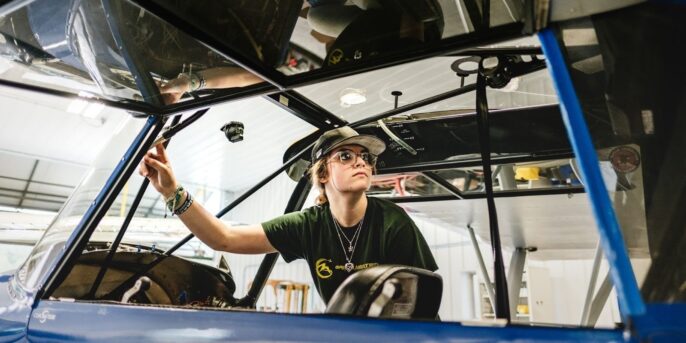
One thing that jumped out is that parents overwhelmingly want more for their kids beyond academics: career and technical education, dual enrollment, arts, sports, and summer learning. Yet most students aren’t getting access. For example, 71% of parents said they want career and technical education for their kids, but only 16% report that their children actually receive it.
Q: How does access to these opportunities differ based on income?
Marc: Income influences nearly everything. Tutoring? Just one in four learners from working-class families received it last year, compared to three in four among the wealthiest. Summer camps? Approximately one-third of working-class children attended versus 88% of children from high-income families. Even when we looked at internships or work-based learning, high-income families had 69% participation; for low-income families, it was just 15%.
And it’s not just the opportunities learners receive, but also how families are engaged. Parents from higher-income households were nearly twice as likely to say they had reviewed their school’s performance, understood how budget decisions were made, and attended a PTA meeting.
Q: Was there anything in the data that surprised you?
Marc: Yes. First, the inequalities just kept climbing, no matter how high we cut the income brackets. We were able to go all the way up to families earning over a million dollars per year, and their children still had even more access to enrichment and support. The gap doesn’t plateau; it keeps widening.
Another surprise: we didn’t see the usual patterns where higher-income states perform better and lower-income states lag. Some states traditionally ranked at the bottom in education, like New Mexico, did really well on arts and music participation. That makes us think there’s more to learn from states’ unique investments.
Q: Felicia, your work at NCFL focuses directly on families, especially those furthest from opportunity. How do your insights from the ground compare to Marc’s data?
Felicia: They align closely. What we see in the data, we hear from families every day. Many parents simply don’t know what opportunities exist for their children. They struggle to navigate systems, and even when they do find programs, they’re often not aligned with their children’s interests or strengths.
At NCFL, we focus on intergenerational learning. That means designing experiences not just for young people, but for their parents or caregivers as well. We’ve learned that when families learn together—especially in community-based spaces—it builds confidence, deepens relationships, and fosters lifelong learning.
Q: Can you share an example of what that looks like in practice?
Felicia: One example is our early learning playgroups. These are for families with children from birth to age five. Parents and caregivers come together with their young ones in creative, curiosity-driven spaces where learning feels joyful, not formal. We’ve heard again and again that these experiences reduce stress, build connection, and increase literacy and language engagement at home.
Another program focuses on family service learning in STEM. Parents, learners, and educators co-create projects, which not only improve academic outcomes but also shift the relationship between families and schools. Parents feel more empowered. Educators see families as true partners. And learners see their families modeling curiosity and persistence.
One last example would be our legacy work in family literacy. We know that children with low literacy often come from homes where literacy is a challenge. Bringing families together for multigenerational learning opportunities allows the whole family to strengthen their literacy together. Districts that have implemented family literacy programming have also seen deeper family-school partnerships and improved student attendance. This longstanding model program creates opportunities to change family trajectories and supports parenting adults in lifting their families out of poverty.
Q: One of the data points Marc shared was about parent satisfaction with different school types. Only 39% of families with children in conventional public schools said they were “very satisfied.” Has NCFL seen ways to increase that perception?
Felicia: Yes. We’ve done deep engagement work with 12 sites in a large urban district—working directly with educators to rethink what authentic partnership with families looks like. We saw a meaningful rise in family satisfaction with their school. And we’re expecting to see improvements in school culture and climate data as well.
When schools invest in building trust and relational capacity with families, especially those who’ve historically been excluded, it transforms how people show up for themselves and each other. And we see ripple effects: stronger literacy outcomes, increased attendance, more family confidence, and greater learner agency.
Q: What’s the takeaway for learner-centered environments and those trying to make this paradigm more accessible?
Marc: First, learner-centered environments already align with what families say they want—more holistic, personalized, connected learning. The challenge is scale. Too many families still feel their only option is a one-size-fits-all approach.
And the way we measure school success needs to evolve. Conventional achievement metrics are important, but so are enrichment, mental health, and out-of-school supports. This data gives us the opportunity to broaden the conversation about what quality education looks like and coalesce around what families are telling us matters.
Felicia: I agree. Learner-centered ecosystems can’t exist in isolation. We need systems that prioritize the whole learner and the whole family. That means co-designing with families, building partnerships between schools and community-based organizations, and recognizing that learning happens everywhere, not just inside classrooms.
We’re also reminded that access and opportunity aren’t just about availability. They’re about relationships, trust, and the social capital that helps families navigate complex systems. When we build spaces where families feel welcomed, heard, and included in decision-making, we move closer to the future we imagine for every child.