Before entering the world of education, I worked in finance. People would politely ask what I did, and I could almost see their eyes begin to glaze over. Finance, for many, belongs to a world far removed from everyday life, with its own language, culture, and values.
When I started Hudson Lab School, I saw the chasm from the other side. Even some of the most innovative educators described a barrier in their work with business and technology professionals: “We speak different languages.”
While every professional world has its own culture and values, beneath those differences lie the same demands of judgment, adaptability, initiative, and willingness to act under uncertainty. Too often, instead of explicitly building those habits, schools prepare students to “do school.” Students do what they are told, when they are told, and in the format they are told to use. That is one set of skills.
The world beyond the classroom asks for a different set of skills entirely. Business rewards how well you use what you know to respond to real needs, collaborate with others, adapt, and create value. It is no wonder that the two worlds can feel so far apart. For students, that difference often becomes a gap they are expected to cross alone, with no map and no instructions, the moment they graduate.
While the gap between school and work is real, the gap between engaging teaching and the entrepreneurial process is much smaller than it seems.
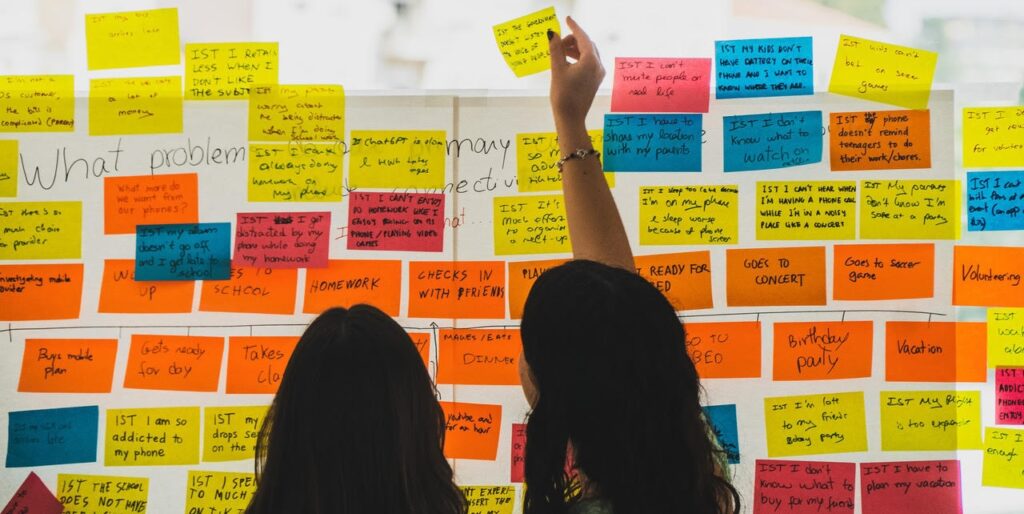
Consider a moment every teacher has faced: a student is disengaged. A student-centered teacher does not simply push harder and hope for compliance. A student-centered teacher asks what is really going on. Is the student struggling with confidence or circumstances outside school, or do they fail to see the relevance of the work? The answer changes the response. The teacher rethinks the work, connects it more directly to the student’s life, and tests a small change to see what happens.
Good teaching is thoughtful, responsive, human work. It is also, in essence, the entrepreneurial process: Listening carefully, getting to the root of a problem, understanding what people actually need, and testing small responses on the way to a better solution.
Good teaching is thoughtful, responsive, human work. It is also, in essence, the entrepreneurial process: Listening carefully, getting to the root of a problem, understanding what people actually need, and testing small responses on the way to a better solution.
Cate Han
The habits at the core of entrepreneurship and the habits at the core of good teaching are the same, we just rarely call them that. That matters because those habits are exactly what students need most beyond school. They are not exotic skills imported from another world. They are habits that student-centered educators model every day. The work is to recognize them and teach them more intentionally.
I wanted to see what might happen if students were given the chance to practice those habits in settings where the stakes were real. In 2022, I started Hudson Lab Ventures to create opportunities for high school students to learn beyond the boundaries of the classroom. Students work with companies, accelerators, governments, and universities on challenges those organizations actually need solved.
The shift we saw in students was not only in their confidence, but in the habits of mind they began to develop. They move from looking for the right answer to learning how to exercise judgment. They become more thoughtful, more resourceful, and more willing to take intellectual risks. One Hudson Lab Ventures parent described the change in her daughter this way: “She had an immediate boost in her confidence to share her ideas and perspectives.”
Our students present to corporate executives, and even Boards of Directors, rooms most adults are rarely invited into. When those audiences take students’ ideas seriously, we see an important shift in how students begin to trust their own ability to take on unfamiliar challenges. They find their voice, develop a stronger sense of ownership, and grow in confidence; not because they outperformed peers, but because they were trusted with something that matters. As one Hudson Lab Ventures student reflected, “I was overcome with happiness from sharing something I had worked so hard on with people who were genuinely interested in it. It was one of the most special moments I can think of.”
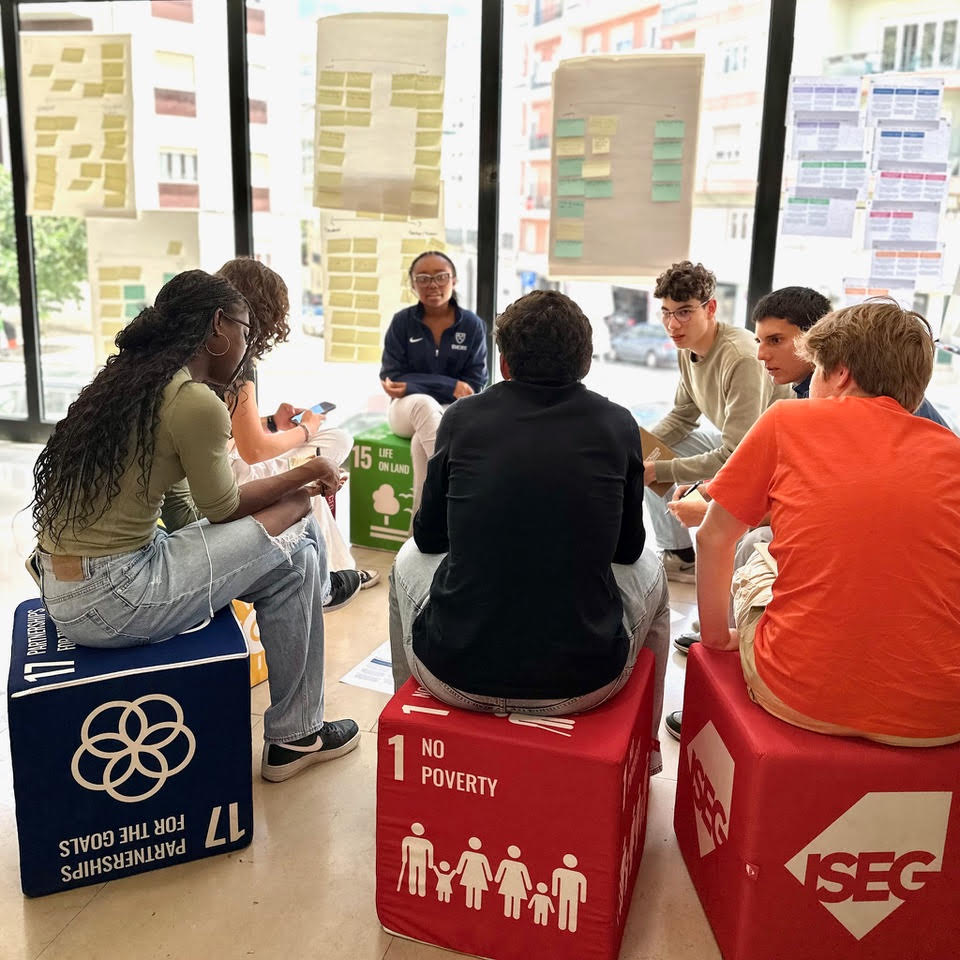
To continue closing the gap between school and work, educators need to be part of the experience too. Together with Unicorn Factory Lisboa and Brian McDonald, STEAM Coordinator at Scarsdale High School and longtime collaborator, we created an educator pathway to help educators recognize the entrepreneurial habits already alive in their teaching, and how to teach those habits more intentionally.
It begins with a week in Lisbon in July, where educators step back, work alongside one another, and apply entrepreneurial thinking to challenges they see in their own schools. It continues online through the school year, where educators guide student teams through the Global Entrepreneurship Challenge as they apply the same frameworks to real problems in their communities.
The bridge between school and work is not built by importing one into the other. It is built by creating the conditions for those worlds to collaborate and recognize what they already share. It is built by giving teachers the pathways and partnerships to build that common language, and by giving students more opportunities to practice those shared habits before they leave school.
If this resonates with you, we would love to hear from you. The educator pathway begins this summer in Lisbon. Learn more here.