Listen: The Other History of Self-Directed Learning in America read by Dr. Caleb Collier
Most people assume the model of schooling we inherited (age-graded classrooms, professional teachers, standardized curriculum, bells and periods) is simply what education looks like. And they assume that the alternatives emerging today, learner-led schools, microschools, and self-directed environments, are the new ideas.
Neither assumption holds up.
The industrial model of schooling is a recent invention. It was designed in the 19th century, borrowed largely from Prussian bureaucratic structures, and built to produce compliant workers for an industrializing economy. Before that model existed, something else was doing the work of education: apprenticeships, community learning circles, mentorship, and the deep human impulse to pursue knowledge on your own terms.
What’s more, the industrial model was never unopposed. All along its development, there were educators, activists, and ordinary people who saw what was being lost and tried something different. Some were academics. Some were Methodist ministers organizing summer assemblies. Some were civil rights workers teaching literacy in church basements at genuine personal risk.
I’ve explored these stories in my book Theoretical and Historical Evolutions of Self-Directed Learning. Earlier this year, I drew from the book to create a Substack series on the history of self-directed learning. The series covers the people and places you’d expect: Dewey, Montessori, Rousseau, Summerhill. But the stories that stuck with me were the examples of ordinary people in U.S. history who are often overlooked by education scholars. Four of them, in particular, have shaped how I think about what education is, what it’s for, and who it’s meant to serve.
The Most American Thing in America
In 1874, a Methodist minister named John Heyl Vincent and a businessman named Lewis Miller organized the first Chautauqua Assembly on the shores of Chautauqua Lake in western New York. It started as a summer program for Sunday school teachers. Within a few decades, it had become one of the largest adult learning movements in American history.
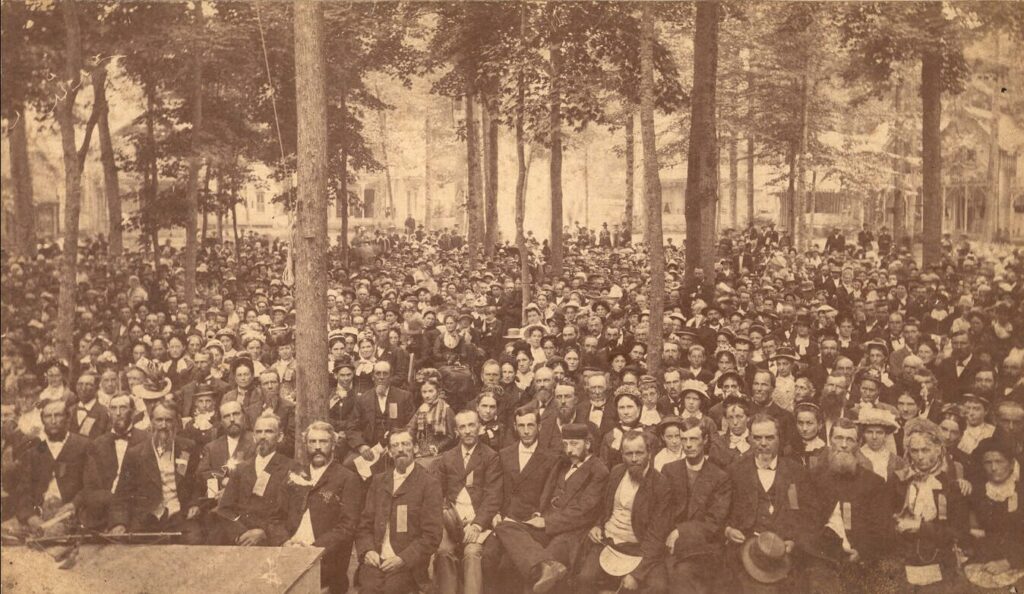
By the early 20th century, the Chautauqua Institution and the traveling circuit it inspired were reaching hundreds of thousands of Americans every year: farmers, shopkeepers, homemakers, factory workers. It included lectures, debates, music, drama, and self-improvement programs. Theodore Roosevelt called it “the most American thing in America.”
What Chautauqua lacked is what makes it remarkable. No required curriculum. No grades. No credentials. No gatekeeping around who could participate. Adults showed up, chose what they wanted to engage with, and formed learning communities around shared curiosity. It was self-directed, community-based learning at a genuinely massive scale, and it was wildly popular precisely because it started from what people actually wanted to know.
Chautauqua reflects the American tradition of the autodidact, a person who pursues knowledge outside formal institutions. From Frederick Douglass teaching himself to read while enslaved to Benjamin Franklin’s Junto club, the tradition of the self-educated American runs through the culture. The mainstream history of education rarely gives it the prominence it deserves.
What Education Is For
No figure in American educational history is more important to the concept of education for human flourishing than W.E.B. Du Bois.
Born in 1868 in Great Barrington, Massachusetts, Du Bois became the first African American to earn a doctorate from Harvard and one of the most penetrating education thinkers this country has ever produced. For Du Bois, education was inseparable from freedom. He wanted Black Americans to have access to the full range of human knowledge, not just the portions deemed economically useful by a white power structure.
His famous disagreement with Booker T. Washington was about exactly this. Washington argued for vocational training to teach Black Americans practical skills and let economic progress lead to social progress. Du Bois thought this was a profound mistake, a surrender of the intellectual and political formation that education at its best provides.
He wrote that “the object of all true education is not to make men carpenters, it is to make carpenters men.” Du Bois wasn’t rejecting the value of hard work. Rather, he was insisting that every human being deserves an education that cultivates their full humanity.
The debate between Washington and Du Bois echoes arguments still happening in education policy today. What is school primarily for? Economic preparation or human development? Du Bois’s answer—education as the full development of the human person—is one of the most compelling foundations for self-directed learning ever articulated. And it came from someone who understood, in the most personal terms, what it meant to be told that certain kinds of learning weren’t for you.
Learning as Survival
The most remarkable self-directed learning story of the 20th century may be one that happened in church basements and community halls across the rural South.
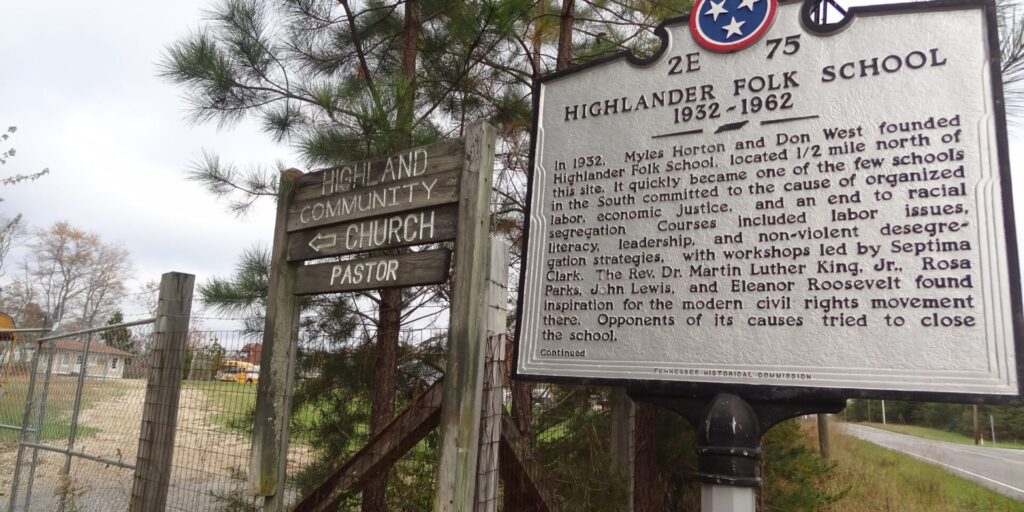
In the late 1950s, an educator named Septima Clark, working alongside community organizer Esau Jenkins and the Highlander Folk School in Tennessee, developed what became known as the Citizenship Schools. The concrete goal was to teach Black Southerners to read and write so they could pass the voter literacy tests being used to systematically disenfranchise them.
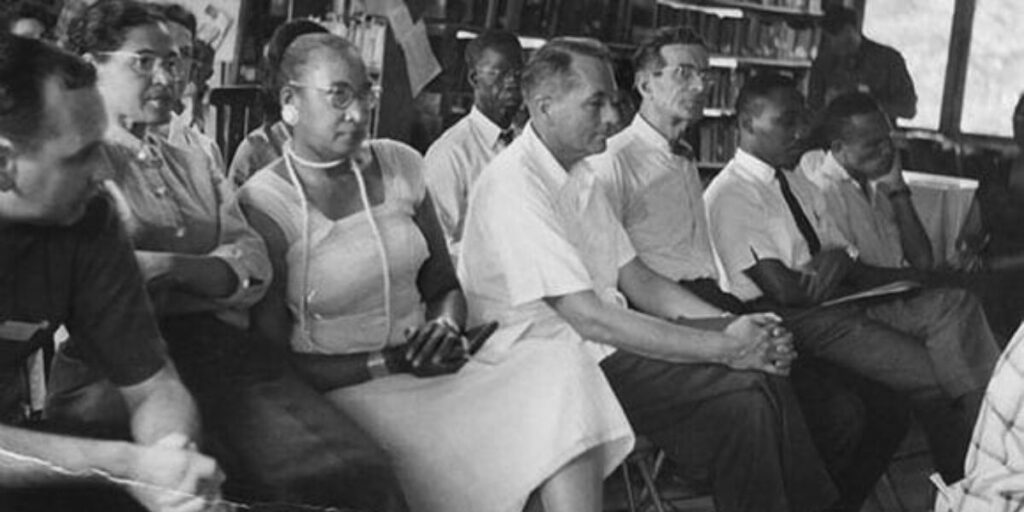
These schools were dangerous. Participants risked losing their jobs, their homes, sometimes their lives. The teachers weren’t credentialed professionals but community members who were slightly more literate than their neighbors. The curriculum was entirely practical and purposeful, everything oriented toward exercising the right to vote.
A community that had been systematically excluded from both formal education and political participation built its own education system because survival required it. Martin Luther King Jr. credited Septima Clark with doing more to transform the South than perhaps any other single individual. The Citizenship School model spread through voter registration campaigns led by the Student Nonviolent Coordinating Committee and became the template for the Freedom Schools of 1964.
Citizenship Schools prove that self-directed learning has never been a luxury. At its roots, it has always been connected to questions of power, freedom, and who gets to be considered a learner at all.
The Hidden Curriculum
By the early 1970s, a philosopher named Ivan Illich had followed the logic of everything that came before and arrived at a conclusion many found too radical to say aloud. The institution of schooling, he argued, was itself the obstacle.
In his 1970 book Deschooling Society, Illich argued that schools have a “hidden curriculum,” a set of lessons taught not through explicit instruction but through the structure of the institution itself. That hidden curriculum teaches students that learning is a commodity, that it comes from institutions, that its quality is measured by credentials, and that a person who hasn’t been through the institution isn’t truly educated.
The question isn’t whether learner-centered education can work; the historical record is clear that it can and has. The question is why we ever stopped trusting it.
Dr. Caleb collier
This matters because you can teach critical thinking in a classroom while simultaneously teaching, through every structural feature of the institution, that authority comes from above and that your own judgment about what to learn doesn’t really count. The official curriculum says “think for yourself.” The hidden curriculum says “do what you’re told.”
Illich proposed replacing schools with what he called “learning webs,” a network of peer exchanges, skill networks, open libraries of resources, and mentors who could help learners navigate their own paths. Read his vision today and you’ll notice it looks remarkably like the internet. He was writing in 1970, years before the World Wide Web existed, imagining its basic architecture.
His ideas sparked the American unschooling movement, particularly through John Holt, who spent the 1970s making the case that genuine self-direction and compulsory attendance were simply incompatible. Whether the internet has delivered the educational liberation Illich imagined is a more complicated question. The infrastructure exists, but the institutional grip on credentials and access remains powerful.
What These Stories Share
Chautauqua. Du Bois. The Citizenship Schools. Illich. Different eras, different communities, wildly different circumstances.
All four start from the same premise that human beings are natural learners, and the most important thing an educational environment can do is trust them. But they share something else that I think matters for how we talk about learner-centered education today.
None of these traditions understood themselves as innovating. They were reaching back, toward something older than the industrial school model, older than Horace Mann’s Prussian classrooms and age-graded curricula and bells and periods. What we call “reforming education” is, in a very real sense, a recovery. A recovery of community-based learning. A recovery of the belief that human beings, given real freedom and real support, will pursue understanding on their own terms.
That reframe matters to our current education discourse because it changes the burden of proof. The question isn’t whether learner-centered education can work; the historical record is clear that it can and has. The question is why we ever stopped trusting it.
Septima Clark didn’t wait for permission. Neither did the organizers of Chautauqua, or Du Bois, or the unschoolers Illich inspired. They built what they needed, from what they had, because the institution couldn’t give them what they required.
The question worth sitting with isn’t whether it’s possible, but whether we’re willing to trust learners the way Septima Clark trusted her neighbors, the way Chautauqua trusted ordinary adults, and the way Du Bois trusted that full humanity was the point of learning.
If you geek out about this stuff, I write about the past, present, and future of learning on my Substack. Follow along!